As urban areas expand, the choice between solar and traditional lighting becomes crucial. Both options significantly impact energy consumption and sustainability. The International Energy Agency (IEA) reported that street lighting accounts for about 30% of total energy use in cities. This raises the question: what is the difference between solar and traditional lighting?
Solar lighting harnesses sunlight, reducing reliance on fossil fuels. According to a recent study by the National Renewable Energy Laboratory (NREL), solar technology can cut energy costs by up to 75%. This approach is beneficial for the environment, decreasing carbon emissions. However, the initial installation costs can be a barrier for many municipalities.
On the other hand, traditional lighting remains widespread due to its reliability and established infrastructure. Despite advancements in energy-efficient bulbs, traditional systems often consume more power over time. Their dependence on grid electricity can lead to higher long-term costs. As cities consider upgrades, understanding the implications of each option is essential for future sustainability.
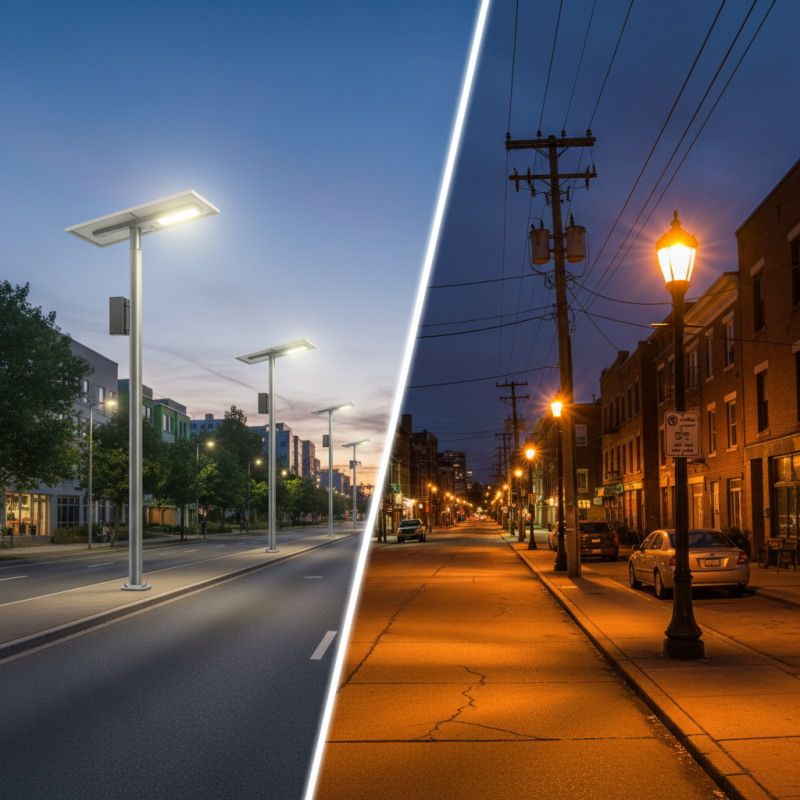
Factors to Consider When Choosing Between Solar and Traditional Lighting
When deciding between solar and traditional lighting, several factors come into play. First, consider installation costs. According to the Solar Energy Industries Association, the average cost to install solar outdoor lighting is approximately $300 per unit, significantly higher than traditional options. However, solar lights require minimal maintenance and zero electricity costs, which can lead to long-term savings.
Next, evaluate the location and application. Solar lighting is ideal for areas with abundant sunlight, such as parks or pathways. In contrast, traditional lighting excels in locations with limited sunlight or during harsh weather. Research by the U.S. Department of Energy reveals that traditional lighting is often more reliable in environments with frequent overcast conditions.
Battery life and efficiency should also be assessed. Solar lights typically use rechargeable batteries that may need replacing every two to three years. This can be a drawback for some users. Meanwhile, traditional lighting can provide consistent brightness without worrying about battery issues. Balancing these factors helps in making an informed decision, depending on specific needs and conditions.
Cost Analysis: Initial Investment and Long-Term Savings Estimates
When considering solar versus traditional lighting, a thorough cost analysis is essential. The initial investment for solar lighting often seems high. However, installation requires minimal labor and no extensive wiring. Traditional lighting involves higher energy costs and ongoing maintenance. These long-term expenses can accumulate quickly, leading to significant savings with solar options.
For solar lighting, calculate anticipated savings over time. With lower utility bills, many users recover their investment faster than expected. Consider local government incentives, which may further reduce costs. It’s also important to factor in lifespan. Solar systems usually outlast traditional bulbs. They require less frequent replacements, leading to less waste.
However, solar lighting may not be ideal for every situation. It can be less effective in areas with limited sunlight. An initial analysis might show higher costs if the system fails to perform. Be cautious about choosing the right products. Seek reliable sources for guidance to ensure a sound decision. Balancing upfront costs with long-term benefits is crucial for informed choices.
2026 How to Choose Between Solar and Traditional Lighting? - Cost Analysis: Initial Investment and Long-Term Savings Estimates
| Lighting Type |
Initial Investment ($) |
Annual Maintenance Cost ($) |
Estimated Lifespan (Years) |
Average Energy Cost Savings (Per Year) ($) |
Total Savings Over Lifespan ($) |
| Solar Lighting |
2500 |
150 |
25 |
400 |
9500 |
| Traditional Lighting |
1200 |
100 |
10 |
100 |
-800 |
Energy Efficiency Ratings: Understanding Lumens per Watt for Each Option
When comparing solar and traditional lighting, energy efficiency is a key factor. One crucial metric to consider is lumens per watt (LPW). This measurement indicates how much light is produced for each watt of electricity consumed. Higher LPW values signify more efficient lighting options.
Solar lights often boast high LPW ratings, especially with advancements in technology. They convert sunlight into electricity, reducing energy costs. Traditional lighting, such as incandescent bulbs, typically has lower LPW ratings. They waste a significant amount of energy as heat instead of light. However, some traditional options, like LED bulbs, can be highly efficient as well. It’s essential to analyze the specific LPW of each lighting type.
Efficiency isn't the only concern. Initial installation costs for solar lighting can be high. While they provide long-term savings, the upfront investment may deter some users. Traditional lighting usually has lower upfront prices but higher ongoing electricity costs. Understanding these dynamics can be challenging. Choosing the right type depends on personal needs, budget, and long-term goals. Reflecting on these factors can lead to better decisions in lighting choices.
Environmental Impact: Solar Lighting vs. Traditional Lighting Emissions
When considering environmental impact, solar lighting shines bright. It generates energy from the sun, reducing reliance on fossil fuels. This shift cuts greenhouse gas emissions significantly. Traditional lighting, often powered by coal or natural gas, leaves a large carbon footprint. Over time, the benefits of solar become clear.
Solar lighting systems have no emissions during operation. This means cleaner air and a healthier planet for future generations. While the initial investment may seem high, the long-term savings in energy bills are substantial. Yet, not every location is ideal for solar. Weather conditions and geographical factors can limit efficiency.
In contrast, traditional lighting can be reliable and widely available. However, the electricity it depends on often comes from polluting sources. This raises questions about its long-term viability. Balancing cost and sustainability is tricky. Sometimes, embracing solar fully might not be feasible for everyone. It’s essential to evaluate local conditions and available technology.
Maintenance Requirements: Comparing Lifespan and Upkeep Costs
When comparing solar and traditional lighting, one of the key factors is maintenance.
Solar lights generally have a longer lifespan, often lasting up to 25 years. Traditional lights,
in contrast, may need replacement every few years, depending on usage. This means that solar lighting can save you money in the
long run.
Despite their lifespan, solar lights do require upkeep. Dust can build up on solar panels, reducing efficiency. Regular cleaning helps
maintain their performance. Watch out for battery replacements, too. These are necessary every few years, which can be a hidden cost.
For traditional lights, frequent bulb changes and fixture repairs are common. This can become tedious and costly over time.
The electricity bills can also add up, unlike solar options, which harness free sunlight.
Tip: Consider how much time and effort you want to invest in maintenance. If you prefer low upkeep, solar might
be your best bet. Evaluate your environment, as shaded areas can affect solar efficiency.
Tip: Keep an eye on local regulations regarding lighting. Some places may have incentives for solar installations.
Understanding these aspects can help you make a more informed decision.
FAQS
: Analyze initial costs and long-term savings. Evaluate maintenance needs and energy efficiency ratings.
Initial costs can be high, but they require less labor and no extensive wiring.
Many users find they recover their costs faster than expected due to lower utility bills.
Sunlight availability plays a major role. Areas with less sunlight might experience reduced effectiveness.
They generally last up to 25 years but need regular cleaning and occasional battery replacements.
Solar lights often have higher lumens per watt (LPW) ratings than traditional incandescent bulbs.
Battery replacements and upkeep can add to the overall costs over time.
Lower initial installation costs and familiarity can be more appealing, despite higher ongoing expenses.
Yes, reflecting on your specific needs and environment leads to better decision-making.
Some areas offer incentives for solar installations, potentially lowering your upfront expenses.
Conclusion
When considering what is the difference between solar and traditional lighting, several key factors come into play. First, the cost analysis reveals that while traditional lighting may have a lower initial investment, solar lighting offers significant long-term savings through reduced energy bills and minimal operational costs. Additionally, energy efficiency ratings play a vital role, as understanding lumens per watt can help consumers select the most effective option for their needs.
Moreover, the environmental impact of each lighting type showcases solar lighting's advantage in terms of reducing emissions compared to traditional alternatives. Lastly, maintenance requirements can vary significantly; solar lighting typically boasts longer lifespans and lower upkeep costs. By weighing these factors, consumers can make an informed decision that aligns with their budget, environmental concerns, and practical requirements.

 GKE Power