Designing a solar lighting system for large areas requires careful consideration of various factors. According to Dr. Emily Carter, a leading expert in renewable energy systems, "Effective solar lighting should balance efficiency and coverage." Her insights help us understand the complexity of this task.
Many areas are challenging to illuminate effectively. Each site has unique requirements. The integration of solar technology must align with the local environment and usage patterns. For example, parks, parking lots, and pathways all present different challenges. An inadequate design can lead to dark spots and unlit zones, impacting safety.
Additionally, budget constraints often limit the ideal solutions. The best systems utilize high-quality solar panels and batteries, ensuring reliability. However, these materials can be expensive. Finding a balance between cost and effectiveness is crucial. A good design should anticipate potential maintenance issues as well. By understanding how to design a solar lighting system for large areas, we can create safer and more sustainable environments.
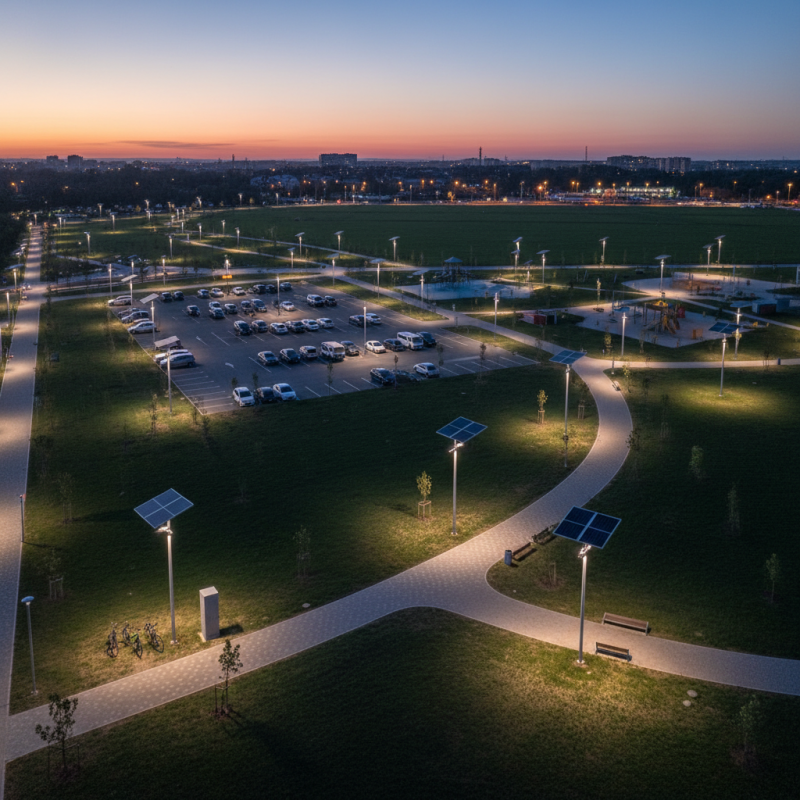
Understanding the Basics of Solar Lighting Systems
Designing a solar lighting system involves understanding its fundamental components. Solar lighting relies on solar panels that convert sunlight into electricity.
According to the National Renewable Energy Laboratory, a well-designed solar system can yield up to 1,000 kWh of electricity per square meter annually in optimal conditions. This makes it vital to assess the site’s solar potential, factoring in shading and seasonal variations.
Energy storage is another crucial element in a solar lighting setup. High-capacity batteries are necessary for ensuring consistent performance during nighttime. Reports from the International Energy Agency show that battery technologies contribute significantly to solar efficiency.
Solar systems can operate for extended periods during cloudy weather, yet they require proper sizing to prevent capacity loss.
Choosing the right battery, typically lithium-ion for its longevity and performance, can be a complex decision.
Challenges often arise in balancing installation costs with long-term savings. While initial investments can be significant, studies indicate that solar lighting can reduce energy costs by 60% over ten years.
This highlights the importance of thorough site assessments and cost analyses. Evaluating financing options and incentives is also critical for achieving project sustainability, yet many overlook this in the planning stages.
Understanding these complexities ensures a more robust design tailored to specific needs.
Assessing Lighting Requirements for Large Areas
When designing a solar lighting system for large areas, understanding the specific lighting requirements is crucial. According to the Illuminating Engineering Society (IES), the recommended illumination levels for outdoor spaces range between 10 to 50 lux, depending on the function. For example, parks typically need around 20 lux, while areas requiring safety, like parking lots, should aim for at least 30 lux. This data highlights the importance of careful assessment.
To effectively assess lighting needs, consider the area's size, use, and the number of poles required. A common mistake is underestimating the spacing of fixtures, which can lead to dark spots. Solar lighting typically offers lower brightness compared to traditional systems, demanding even more strategic placement. The U.S. Department of Energy suggests calculating the total lumen output needed to meet 10-30 lux for most open areas.
Tip: Use photometric planning software to visualize the light distribution. This can aid in selecting the right fixtures and avoid unexpected results. Regularly review the system’s performance too. Variability in sunlight exposure can affect charge efficiency, potentially requiring realignment or adjustments. Remember, creating a well-lit space is not just about the number of lights; it's also about their optimal placement to create uniform lighting.
Selecting Appropriate Solar Panels and Components
When designing a solar lighting system for large areas, selecting the right solar panels and components is critical. Data from the National Renewable Energy Laboratory indicates that solar panels should have an efficiency rating of at least 15% for optimal performance. Choosing higher efficiency models can significantly reduce the number of panels needed, saving space and installation time.
Additionally, consider the geographical location and average sunlight hours. For instance, a report from the Solar Energy Industries Association states that areas with more than 5 peak sun hours daily can benefit from lower-capacity panels. This information can guide decisions on sizing and placement, ensuring that the system effectively meets the lighting demands.
Battery selection also plays a vital role. Lithium-ion batteries, while costlier, offer better lifespan and efficiency compared to lead-acid batteries. Studies show that lithium-based systems can last up to twice as long. However, the initial investment requires careful budgeting and planning. It’s essential to reflect on these factors to avoid potential pitfalls during installation, as miscalculations can lead to inadequate lighting or higher operational costs. Balancing upfront costs with long-term benefits is crucial for a sustainable solar lighting solution.
Designing the Layout for Optimal Light Distribution
Designing the layout for optimal light distribution in a solar lighting system for large areas requires careful consideration of several factors. According to recent industry reports from the Solar Lighting Association, achieving a balance between light intensity and coverage is critical. Data suggests that an average illuminance level of 10-15 lux is ideal for outdoor spaces such as parks and parking lots. This level ensures visibility without causing light pollution.
Placement of solar lights greatly affects their efficiency and the distribution of light. A common approach is the spacing of fixtures. For instance, installing lights every 20 to 30 feet provides adequate coverage while maximizing energy efficiency. Maintaining a lower pole height can also enhance light spread, especially in large open areas. Yet, there is a tendency to overestimate the power of solar fixtures, leading to uneven light patterns.
It’s also important to study the surrounding environment. Trees and buildings can create shadows, diminishing light efficiency. Adjustments in layout may be necessary to account for seasonal changes in daylight. Reflecting on these challenges is valuable. Poor planning can lead to dark spots, undermining the utility of the lighting system. Continuous evaluation and adjustment can provide better outcomes.
Implementing Maintenance and Monitoring Protocols
Implementing maintenance and monitoring protocols in solar lighting systems is crucial for long-term efficiency. Regular maintenance helps reduce operational costs by up to 30%, according to industry reports. Effective monitoring systems can detect issues early, preventing costly repairs. For large areas, integrating sophisticated data analytics tools is essential. These tools collect performance data, which helps assess the system's health over time.
Routine inspections should include checking LEDs, batteries, and solar panels. A recent study indicates that 20% of solar lighting systems fail due to neglected maintenance. Properly maintaining these components boosts overall lifespan and performance. It is vital to create a maintenance schedule based on real-time data analyses rather than generic timelines.
The importance of training maintenance staff cannot be overlooked. Skilled personnel are more capable of performing in-depth diagnostics. They can identify nuances that automated systems might miss. This human factor is essential for ensuring reliability in a large solar lighting network. An evaluation of failure rates suggests that systems with trained staff see a 15% lower overall failure rate. Investing in continuous education for maintenance teams ensures optimal performance and reliability in solar installations.
FAQS
: The ideal illuminance level is 10-15 lux for areas like parks and parking lots.
Regular inspections are crucial. They should be based on real-time data, not just schedules.
Installing lights every 20 to 30 feet provides adequate coverage and energy efficiency.
Trees and buildings create shadows that reduce light efficiency. Layout adjustments may be needed.
Neglected maintenance contributes to 20% of solar lighting system failures.
Trained staff perform better diagnostics and spot issues that automated systems might miss.
Regular maintenance can reduce operational costs by up to 30%.
Poor planning can lead to dark spots that undermine the lighting system's utility.
Lower pole heights enhance light spread in large open areas, improving efficiency.
Integration of data analytics tools helps monitor the system’s health and performance over time.
Conclusion
In understanding how to design a solar lighting system for large areas, it is essential to start with a solid grasp of the basic components involved in solar lighting systems. This includes awareness of the types of solar panels, batteries, and other necessary components. Next, assessing the specific lighting requirements for the target area is crucial, as factors such as the size of the space, intended usage, and desired brightness all play a significant role in the design process.
Once the requirements are established, selecting appropriate solar panels and components tailored to those needs is the next step. After that, designing an efficient layout ensures optimal light distribution, maximizing the effectiveness of the system. Finally, implementing maintenance and monitoring protocols is vital to ensure the longevity and reliability of the solar lighting system. By following these guidelines, one can effectively create a solar lighting solution that meets the practical needs of large environments.

 GKE Power