7 Best Ways Weather Conditions Affect Solar Lights?

Time:2026-09-16 Author:Isabella
0%

Solar lights promise simple outdoor illumination, yet weather can quietly change their performance. Sunlight, rain, snow, heat, humidity, wind, and dust all affect charging, storage, and nighttime brightness. Understanding how do weather conditions affect solar lights helps homeowners choose suitable products and maintain realistic expectations.

Dr. James P. Dunlop, a photovoltaic systems engineer and author of Photovoltaic Systems, emphasizes a practical principle: “The energy available from a photovoltaic system depends on the solar resource at the site.” That resource changes dramatically when thick clouds cover the sky or snow blocks a panel. A light may glow brightly after a clear summer day, then fade early after several rainy afternoons. Small details matter. Water can enter poorly sealed housings. Moisture may corrode contacts. Extreme heat can shorten battery life, while freezing temperatures can reduce battery output temporarily.

This guide examines seven weather-related effects, including cloudy conditions, heavy rain, snow coverage, high temperatures, freezing weather, strong winds, and airborne dust. Each section connects the weather to a visible result, such as dimmer light, slower charging, or intermittent operation. The explanation is practical rather than absolute. Not every solar light reacts identically, and product quality changes the outcome. I have also found that manufacturer claims can feel optimistic in difficult climates. A larger panel does not solve every problem. Good placement, regular cleaning, secure installation, and battery replacement still matter. Weather is only part of the story, but often the part people notice first.
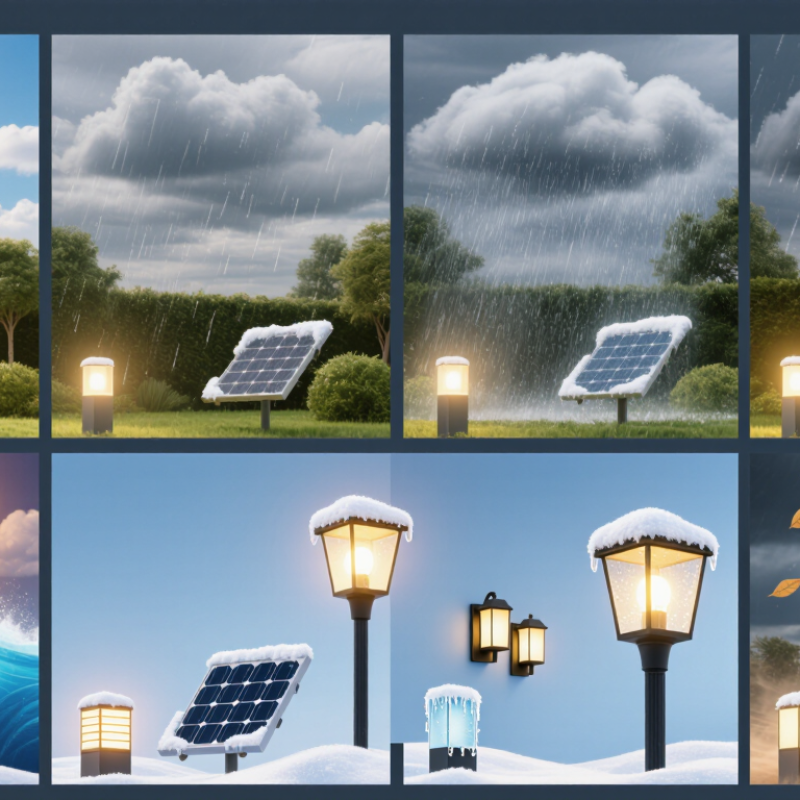
7 Best Ways Weather Conditions Affect Solar Lights?

How Solar Lights Convert Weather Conditions Into Performance Changes

7 Best Ways Weather Conditions Affect Solar Lights?

How Solar Lights Convert Weather Conditions Into Performance Changes

Solar lights translate changing weather into electrical results through their panels, batteries, and control circuits. Bright, direct sunlight creates stronger current and fills the battery faster. Cloud cover scatters light, so charging continues but usually at a lower rate. A pale winter sky can look bright while producing surprisingly little usable energy. I have seen lights charge adequately at noon yet dim early after several cloudy hours.

Heat also changes performance. High temperatures can reduce panel efficiency and accelerate battery aging, especially inside dark housings. Cold weather may slow the battery’s chemical reactions, causing shorter nighttime operation. Rain itself rarely harms a sealed light, but water on the panel can scatter incoming light. Heavy rain often arrives with clouds, creating a double loss.

Small details matter.

Snow can block the panel completely until it melts or is removed safely. Wind may carry dust, leaves, or salt onto the surface, reducing sunlight absorption. Humidity can encourage condensation around weak seals, although reliable designs limit this risk. In practical checks, I clean panels monthly and compare runtime after clear and cloudy days. That method is useful, but it is not perfect; seasonal angle, shade, and battery age also affect the result. A light under a tree may appear weather-sensitive when the real problem is afternoon shadow. Lasanble

7 Best Ways Weather Conditions Affect Solar Lights? - How Solar Lights Convert Weather Conditions Into Performance Changes

Typical effects of weather conditions on solar collection, battery charging, illumination, and operating time

Weather Condition Main Solar-Light Component Affected Typical Performance Change How the Change Happens Practical Action
Short winter days and low sun angles Solar panel and battery Less daily energy collection; nighttime runtime may decrease by about 20–50% compared with a clear summer day. Fewer daylight hours and a lower solar elevation reduce the total sunlight received by the panel. Install the panel in an unobstructed, sun-facing position and reduce the lighting schedule when necessary.
Cloudy or overcast weather Solar panel Charging can fall substantially; thick cloud may reduce available solar irradiance to roughly 10–30% of strong direct sunlight. Clouds scatter and absorb sunlight before it reaches the photovoltaic cells, lowering charging current. Use a larger panel or higher-capacity battery where frequent cloudy conditions are expected.
Rain and prolonged wet weather Panel, wiring, controller, and battery enclosure Rain itself does not stop photovoltaic generation, but heavy cloud and water-covered surfaces can reduce charging and shorten runtime. Reduced irradiance limits energy production, while poor sealing can allow moisture-related electrical faults or corrosion. Keep the panel clean, inspect seals and cable glands, and use weather-resistant enclosures suitable for outdoor installation.
Snow and ice accumulation Solar panel and mounting structure A covered panel may produce little or no energy until the snow or ice is removed or melts. Opaque snow blocks sunlight, while accumulated weight can place additional stress on mounts and supports. Use an adequately angled mount and remove snow gently with a soft tool; do not scratch the panel surface.
High temperatures Photovoltaic cells and rechargeable battery Panel voltage generally decreases as cell temperature rises; battery aging may also accelerate in sustained heat. Most photovoltaic modules lose approximately 0.3–0.5% of power per °C above their rated test temperature, depending on cell design. Provide airflow around the panel and keep the battery out of enclosed locations exposed to extreme heat.
Low temperatures and frost Battery capacity and charging system Available battery capacity can temporarily decline in cold conditions, and some battery chemistries require charging-temperature protection. Cold increases battery internal resistance and slows electrochemical reactions; frost can also block part of the panel. Select a battery rated for the local temperature range and use a controller with appropriate low-temperature safeguards.
Wind, dust, and airborne debris Panel surface and mounting hardware Dust, pollen, and debris can reduce light transmission; strong wind can misalign or damage a poorly secured panel. Surface particles create shading, while wind loads place mechanical stress on brackets, poles, and fasteners. Clean the panel periodically, tighten mounting hardware, and position the unit away from direct sources of blowing debris.

Note: Actual results vary with panel orientation, latitude, shading, battery chemistry, light brightness, operating schedule, and local weather patterns. The percentage ranges shown are typical planning estimates rather than guaranteed output values.

How Sunlight Levels Affect Charging and Nighttime Illumination

Sunlight levels decide how well a solar light performs after dark. The U.S. National Renewable Energy Laboratory explains that photovoltaic output depends mainly on available irradiance, panel angle, temperature, and system losses. Direct midday sun usually charges a battery faster than weak morning light. Bright overcast weather still provides diffuse radiation, but charging may fall sharply. A cloudy day can leave the lamp glowing for only a few hours.

The Global Solar Atlas 2.0 shows that yearly solar energy can range from below 900 to above 2,000 kWh per installed kilowatt, depending on location. That difference matters for small outdoor lights. A garden light under trees may receive much less energy than its location suggests. Snow, dust, and rain can also shade the panel. Rain may clean the surface, but repeated storms can expose poor drainage or loose wiring. My own practical mistake was judging performance by daytime brightness alone. Nighttime runtime is the real test.

Tips: Place the panel toward the strongest daily sun, away from walls and branches. Wipe it monthly. Check winter performance separately. Short charging windows may require lower brightness settings, although that feature is not always clearly explained. Designers should also leave some battery reserve; a perfect sunny day is not a dependable daily assumption.

How Rain, Humidity, and Snow Influence Solar Light Components

7 Best Ways Weather Conditions Affect Solar Lights?

Rain can reduce solar light performance in several ways. Water may enter loose seals, cracked covers, or poorly protected battery compartments. This can cause corrosion around terminals and shorten battery life. Wet panels also collect dust and pollen, reducing sunlight absorption after the rain stops. During outdoor inspections, I have found that drainage matters as much as waterproofing. A light placed in a shallow puddle often fails earlier than one exposed to heavy rain.

Humidity creates another hidden problem. Warm, moist air can condense inside the housing when temperatures fall at night. Repeated condensation may cloud the lens, damage circuit boards, or weaken electrical contacts. High humidity also accelerates corrosion, especially near metal springs and charging connections. I used to blame every dim light on a weak battery. Sometimes, moisture was the real cause. This is an easy mistake to make.

Tips: Check seals before the wet season. Keep the panel clean with a soft, damp cloth. Do not pressure-wash the unit. In snowy areas, brush snow away gently before charging hours begin. Heavy snow can block the panel completely and add stress to the support arm. Freezing and thawing may also create small cracks that are hard to notice. Choose weather-resistant construction, but remember that ratings do not replace regular inspection.

How Wind, Storms, and Extreme Temperatures Affect Durability

7 Best Ways Weather Conditions Affect Solar Lights?

How Wind, Storms, and Extreme Temperatures Affect Durability

Wind stresses poles, brackets, and ground stakes. Strong gusts can loosen screws or tilt panels away from direct sunlight. NOAA classifies hurricane winds from 74 mph, while major hurricanes begin at 111 mph. Solar lights rarely face those forces without damage. Flying branches create another risk. They can crack panels, lenses, or motion sensors. In coastal areas, salt spray accelerates corrosion. A perfect IP rating is not a perfect guarantee.

Heavy rain exposes weak seals and aging cable joints. IEC 60529 water-resistance ratings describe laboratory protection, not permanent outdoor performance. Freeze-thaw cycles can widen tiny cracks. Heat also matters. Battery capacity falls in cold weather, while repeated heat exposure can shorten battery life. The IEA PVPS Task 13 report identifies a median photovoltaic degradation rate near 0.5% annually. Solar lights use smaller modules, but dust, heat, and moisture still reduce useful output. Real gardens are messier than test chambers.

Tips: Choose secure mounting, flexible cable glands, and rechargeable batteries suited to local temperatures. Inspect fasteners after storms. Clear leaves from the panel. Avoid placing lights where water collects. In snowy regions, angle panels to shed snow. In hot climates, provide airflow around the battery compartment. Field checks often reveal the overlooked problem: poor drainage. That detail matters.

How Seasonal Maintenance Helps Solar Lights Perform Reliably

Weather affects solar lights through cloud cover, heat, rain, snow, dust, and changing daylight hours. Seasonal maintenance keeps these small systems dependable.

Winter During winter, shorter days reduce charging time, while snow can block the panel completely. Brush snow away with a soft cloth. Avoid scraping the surface.

Spring In spring, inspect the panel for pollen, mud, and bird droppings. Even a thin film can reduce sunlight noticeably. Wipe it with clean water and a microfiber cloth.

Check the light’s angle as nearby plants grow. I once ignored a climbing vine, and one light became almost useless by June.

Summer Summer heat can age rechargeable batteries faster, especially inside dark, poorly ventilated housings. Keep the area around each unit clear of dense leaves.

After heavy rain, examine seals, screws, and cloudy covers for moisture.

Autumn Autumn brings falling leaves and longer shadows, so clear debris before evening. Battery performance may still decline with age.

Replacing it too early wastes money, but waiting too long causes weak lighting.

I now record charging time and brightness each season, although my notes are not always perfect. This simple record helps separate weather problems from worn components.

FAQS

How can rain reduce the performance of solar lights?

Rain may enter loose seals, cracked covers, or poorly protected battery compartments. This can corrode terminals and shorten battery life. Wet panels may also collect dust and pollen after rainfall.

Why does drainage matter for outdoor solar lights?

Poor drainage can be more damaging than heavy rain. A light sitting in a shallow puddle may fail early. Place it on firm, raised ground whenever possible.

How does humidity damage solar light components?

Warm, moist air can condense inside the housing during cool nights. Repeated condensation may cloud the lens or damage circuit boards. Metal springs and charging contacts can also corrode.

Could moisture be mistaken for a weak battery?

Yes, moisture may cause dim lighting even when the battery still works. I once blamed every dim light on the battery. That assumption was wrong.

What problems can snow create for solar lights?

Heavy snow can block the panel completely and stress its support arm. Freezing and thawing may widen tiny cracks in covers or housings. Brush snow away gently before charging hours begin.

How do strong winds and storms affect solar lights?

Wind can loosen screws, bend brackets, or tilt panels away from sunlight. Flying branches may crack panels, lenses, or motion sensors. Inspect fasteners after severe weather.

How do temperature changes affect batteries and panels?

Cold weather can reduce battery capacity temporarily. Repeated heat exposure may shorten battery life. Small photovoltaic modules can also lose useful output from dust, heat, and moisture.

Do weather-resistance ratings guarantee outdoor durability?

No, ratings describe controlled testing rather than permanent outdoor performance. A strong rating cannot prevent poor drainage, aging seals, or storm damage. Real gardens are messier.

Conclusion

Understanding how do weather conditions affect solar lights is essential for maintaining reliable outdoor illumination. Sunlight intensity and daylight duration directly influence how much energy the panel stores, so cloudy, rainy, or winter days may lead to shorter lighting times and weaker brightness at night. Rain and humidity can also affect electrical connections, while snow may cover the panel and prevent effective charging. Keeping the panel clean and unobstructed helps preserve performance.

Wind, storms, and extreme temperatures can place additional stress on solar lights. Strong winds may loosen fixtures or carry debris against them, while heavy weather can expose weak seals and internal components to moisture. Very high or low temperatures may reduce battery efficiency and shorten its useful life. Seasonal maintenance, including cleaning panels, checking supports, removing snow, and inspecting batteries and seals, allows solar lights to adapt better to changing conditions and provide more consistent performance throughout the year.

Isabella

Isabella

Isabella is a dedicated marketing professional with a sharp focus on driving brand growth and engagement through strategic content creation. With an extensive background in digital marketing, she combines her passion for storytelling with her keen understanding of industry trends to deliver......