Solar lighting uses photovoltaic panels to convert sunlight into electricity. Batteries store that energy for use after dark. In cities, these systems can power streetlights, pathways, bus shelters, signs, and other public spaces. Some operate independently, while others connect with sensors and municipal networks. A lamp might dim when a road is empty, then brighten as a pedestrian approaches. Small adjustments like these can help reduce wasted energy. The appeal is clear.
The question of why solar lighting is popular in smart cities has several practical answers. It can reduce reliance on grid electricity, serve places where wiring is difficult, and provide operating data when paired with connected controls. For city planners, this may support quicker lighting projects near a new cycle path or a remote park entrance. For residents, it can mean a better-lit route home. These benefits depend on thoughtful design, not technology alone.
Solar lighting is not a universal fix. Performance depends on sunlight, shading, battery capacity, temperature, and maintenance. A panel beneath tree cover may produce less power than expected, while an ageing battery can reduce reliability. Cities should assess local weather, nighttime demand, installation costs, and replacement plans before selecting a system. This introduction explores how solar lighting works, where it fits in smart-city design, and why its popularity continues to grow. But trade-offs remain. Reliable results require careful planning, not simply a solar panel and a connected lamp.
What Solar Lighting Is and How It Works
Solar lighting uses photovoltaic panels to turn sunlight into electricity. In a typical streetlight, the panel charges a rechargeable battery during the day. A charge controller regulates that process and helps protect the battery. At dusk, a light sensor signals the LED to switch on. Simple, but not effortless.
Battery capacity, panel angle, shade, and local weather all affect performance. A tree that casts a shadow across the panel can reduce its daily charge. Designers therefore estimate how many hours the light must operate and allow for cloudy days. In practice, a smaller fixture may dim overnight to conserve energy. The trade-off is real.
Solar lighting also fits into wider shifts in electricity generation. IRENA’s Renewable Capacity Statistics 2024 reports that solar power capacity grew by about 346 gigawatts worldwide in 2023. That figure describes the power sector, not solar streetlights specifically, but it shows how rapidly the underlying technology is scaling. In smart-city systems, networked controllers can report faults or adjust brightness when streets are quiet. Yet connectivity adds equipment that also needs upkeep. A light that works well on a clear evening may struggle after several overcast days; system design must account for that.
Key Components of a Solar Lighting System
A solar lighting system is more than a panel on a pole. Its photovoltaic module converts daylight into electricity, while a charge controller regulates the flow and helps protect the battery. After sunset, the battery powers an LED luminaire, often through a dusk sensor or motion detector. Small details matter: cable seals, ventilation, and secure battery housing can affect performance in rain, heat, and dust. The design is not foolproof.
Battery capacity should match the local solar resource, expected hours of darkness, and required brightness. A cloudy week can expose an undersized system quickly. LED efficiency helps reduce demand, but placing lights too far apart may still leave dark patches on a walkway. IRENA’s Renewable Power Generation Costs in 2023 reports that utility-scale solar PV’s global weighted-average electricity cost was 56% below fossil-fuel alternatives. That figure describes large power plants, not standalone streetlights, but it reflects how solar generation costs have changed.
Smart-city installations may add a communications unit, remote monitoring, and dimming controls. These components can report battery status or flag a failed lamp, reducing inspection trips. Yet sensors need careful calibration; a motion detector that responds to passing branches is not very smart. Engineers should check winter sunlight, shading from buildings, battery replacement access, and measured nighttime illumination before choosing a configuration.
What Is Solar Lighting and Why Is It Popular in Smart Cities?
Key components work together to collect, store, and use solar energy. This example compares daily energy generation and LED demand with usable battery storage for one illustrative system design.
Illustrative calculation: a 100 W solar panel receiving 5 peak sun hours with a 75% overall derating factor generates about 375 Wh per day. A 30 W LED operating for 12 hours uses 360 Wh. A 12.8 V, 40 Ah battery stores 512 Wh nominally; at 80% usable depth of discharge, usable storage is about 410 Wh. Actual performance varies with location, weather, orientation, and system efficiency.
How Solar Lights Connect with Smart City Infrastructure
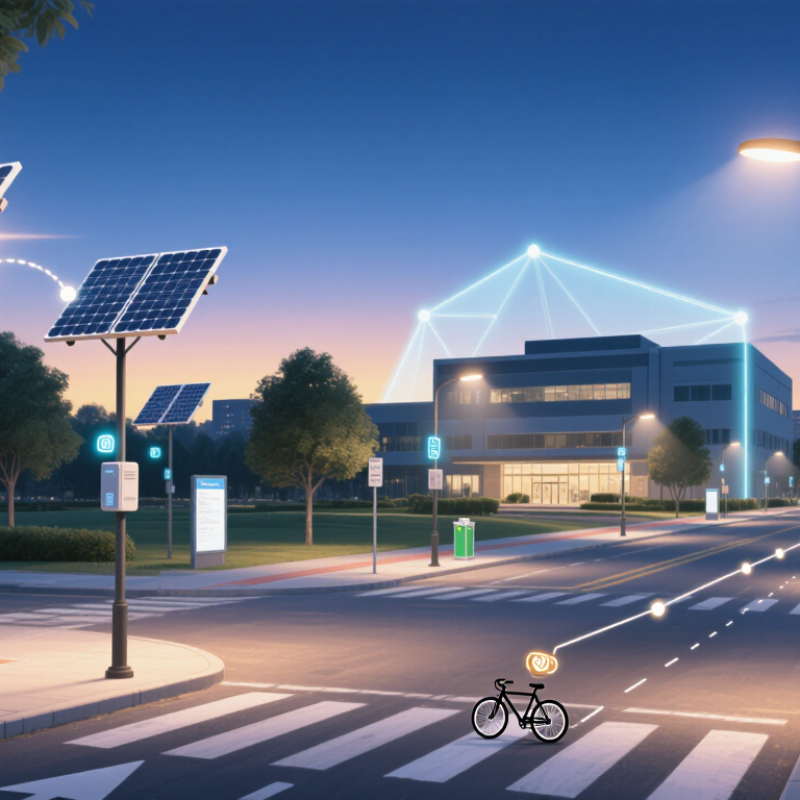
Solar lighting uses photovoltaic panels to convert daylight into electricity, which is stored in batteries for use after dark. In a smart city, a solar streetlight can do more than illuminate a pavement. Its controller may share operating data with a city management platform through a wireless gateway. A maintenance team can then see battery levels, lamp status, and possible faults without visiting every pole. Small sensors can also adjust brightness when a road is quiet.
Integration depends on compatible equipment and reliable communications. A pole-mounted sensor might detect movement, while a network connection sends a status update to a control center. Operators can schedule dimming or flag a lamp that needs inspection. These details matter on a rainy evening, when reduced visibility makes steady lighting especially useful. Yet not every installation needs a network. Remote locations may have weak coverage, and added electronics can increase maintenance needs. Solar power also varies with weather and shade, so battery sizing and local site checks remain essential. This part is easy to underestimate.
Tips: Check sun exposure, battery capacity, and network coverage before installation. Test data sharing and dimming on a small street section first. Keep a manual inspection plan, too.
Common Uses of Solar Lighting in Urban Areas
Solar lighting uses photovoltaic panels to convert daylight into electricity, which is stored for use after dark. In cities, it can illuminate bus shelters, park paths, pedestrian crossings, and public seating areas. A softly lit path helps people notice uneven paving and nearby steps. At bus stops, overhead fixtures can make route information easier to read at night. Solar-powered signs and small lights can also support temporary street works where connecting to the grid is difficult.
The best locations usually receive several hours of direct sunlight. Panels need clear exposure, while fixtures should direct light onto walking surfaces rather than into nearby windows. Battery capacity matters too: long winter nights and several cloudy days can reduce available lighting. A common planning gap is focusing on installation and overlooking cleaning, battery checks, and repairs. These systems are not maintenance-free. In shaded streets, a grid-connected or hybrid option may be more dependable.
Tips: Check sunlight at different times of day before choosing a site. Keep panels clear of leaves and dust, and test lights after installation. A small trial can reveal glare or dark patches before a wider rollout. Don’t assume every corner needs the same brightness.
Why Cities Adopt Solar Lighting and What Limits Its Use
Solar lighting pairs photovoltaic panels with LED fixtures, batteries, and controls. It can serve parks, pathways, bus stops, and streets where trenching new grid connections is costly or disruptive. Motion sensors and dimming can reduce energy use during quiet hours, while local generation offers some resilience during grid outages. The technology is no longer niche: IRENA’s Renewable Capacity Statistics 2024 reports that solar added 346 gigawatts of global capacity in 2023, within a record 473-gigawatt increase in renewables. That growth supports a mature supply chain, but it does not guarantee a good result at every site.
Placement is critical. Tall buildings, tree canopies, dust, and winter shade can leave panels short of charge; a lamp may dim before dawn after several cloudy days. Batteries also age and need replacement, adding future cost and maintenance. The IEA’s Batteries and Secure Energy Transitions report says lithium-ion battery prices fell about 90% between 2010 and 2023. Still, cheaper cells do not erase the cost of poles, installation, controls, and servicing. A shaded side street may need larger panels or a grid connection, weakening the savings case. That calculation can look cleaner on paper than on a wet street. Cities need local sunlight data, careful placement, and realistic battery-replacement plans before choosing solar.
Conclusion
Solar lighting converts sunlight into electricity through photovoltaic panels, stores that energy in batteries, and uses it to power lights after dark. A typical system combines solar panels, batteries, LED lamps, a charge controller, and sensors or a communications unit. Together, these components can regulate charging, adjust brightness, and help lighting operate efficiently through changing conditions.
Connected with smart city infrastructure, solar lights can share status information and respond to remote controls, motion sensors, or environmental data. Cities use them along streets, pathways, parks, transit areas, and other public spaces, including locations where connecting to the electrical grid is difficult. This helps explain why solar lighting is popular in smart cities: it can reduce reliance on grid electricity, support flexible installation, and enable more responsive lighting. However, performance depends on sunlight, battery capacity, weather, and maintenance. Upfront costs, shading, and the need for reliable monitoring can also limit where and how widely cities adopt these systems.

 GKE Power