 GKE Power
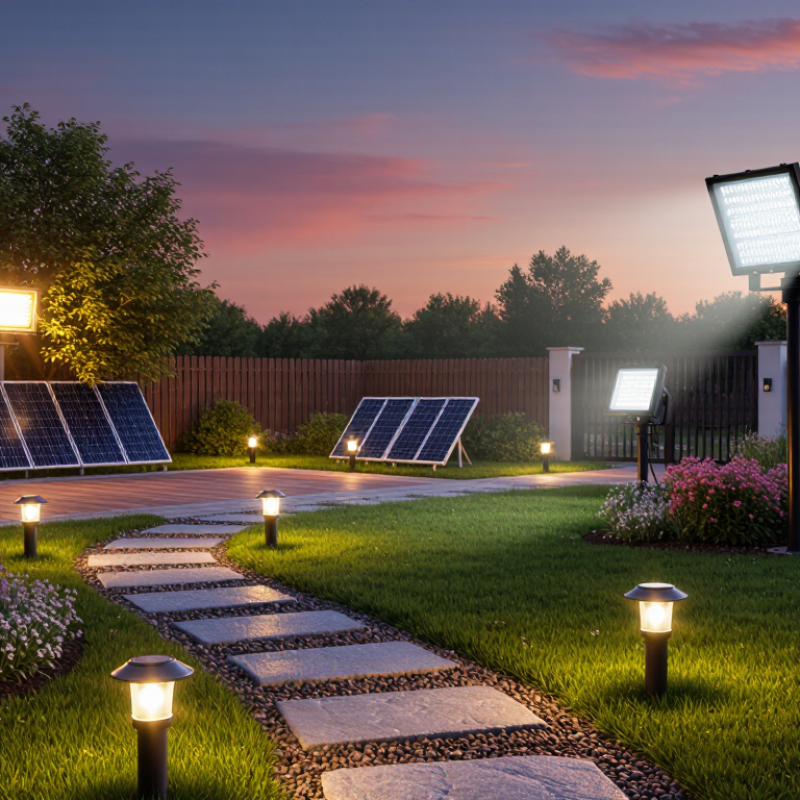
How Bright Are Solar Outdoor Lights and How to Choose?
Brightness depends on more than the LED. A useful measure is lumens, while lux describes light reaching a surface. A 600-lumen fixture may look bright above a doorway but weak along a wide path. The U.S. Department of Energy’s Solid-State Lighting R&D Opportunities report notes that LED component efficacy can exceed 200 lumens per watt. Finished fixtures produce less because optics, wiring, heat, and battery limits reduce output.
The solar panel controls daily energy collection. NREL’s PVWatts documentation shows that solar production changes with location, season, panel angle, and shading. A light under a tree may collect far less energy than its packaging suggests. Battery capacity matters after cloudy weather. The International Energy Agency Photovoltaic Power Systems Programme reports that module degradation is commonly around 0.5% yearly, although small outdoor products can age differently.
Choose the brightness by task. CIE 115:2010 uses different maintained illuminance levels for pedestrian environments, so a pathway should not be judged by lumens alone. Look for adjustable modes, a stated battery capacity, panel wattage, and a measured runtime. Warm light can feel softer, while narrow optics create sharper pools. I have found that exaggerated lumen claims often hide short runtimes. Weather is another weakness. Even a well-designed light can disappoint in winter, and that deserves honest consideration.
