Solar vs Traditional Lighting Which Is Better in 2026?

Time:2026-10-01 Author:Liam
0%

Solar vs Traditional Lighting: Which Is Better in 2026?

The question “what is the difference between solar and traditional lighting” now reaches beyond energy bills. It involves installation, reliability, maintenance, light quality, and long-term environmental costs. In 2026, solar fixtures use more efficient panels, improved batteries, and smarter controls. Yet traditional grid-connected lighting still offers stable power in dense urban areas.

Lighting researcher Christopher Cuttle has stated, “The purpose of lighting is to enable people to see.” That practical view matters. A solar pathway light may brighten a garden after sunset, but weak winter sunlight can shorten its runtime. A traditional streetlight can remain dependable through storms, though its wiring and electricity demand create ongoing costs.

Real experience often complicates simple comparisons. A homeowner may install six solar lamps in one afternoon. Months later, shaded panels, cloudy weather, or fading batteries may reduce their brightness. Meanwhile, replacing a damaged underground cable can require tools, labor, and professional access. Neither option wins everywhere.

This guide examines performance in real settings, including driveways, streets, gardens, warehouses, and emergency areas. It compares energy use, brightness, maintenance, lifespan, weather resistance, and total ownership cost. Some claims deserve caution. Solar lighting is not automatically greener, and traditional lighting is not always wasteful. The better choice depends on location, usage patterns, local sunlight, and the quality of the equipment. Good lighting should serve people first. Cost and sustainability follow.
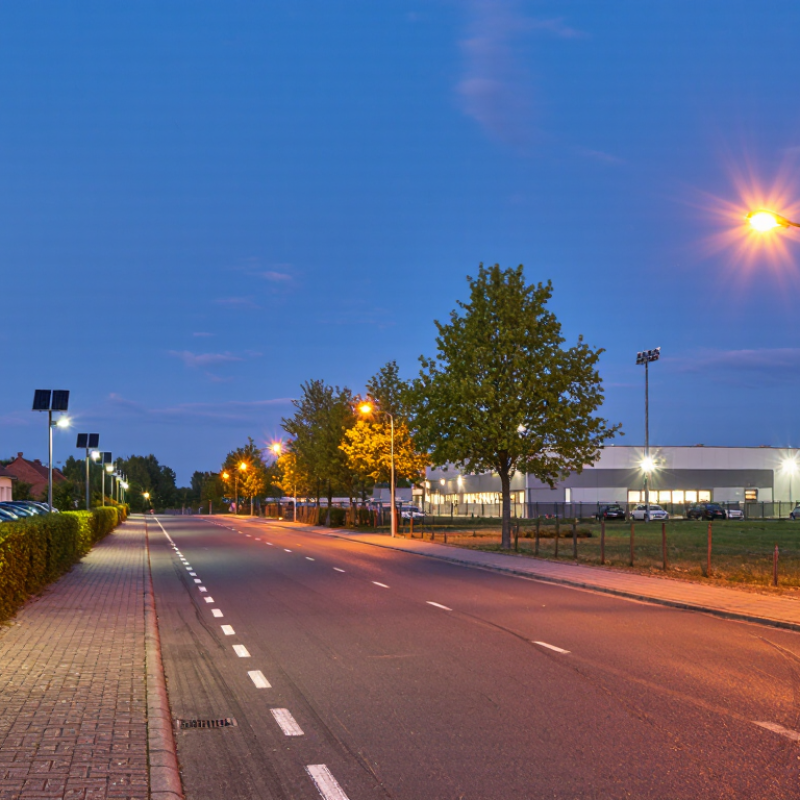
Solar vs Traditional Lighting Which Is Better in 2026?

Solar and Traditional Lighting: Definitions and Core Differences

Solar and Traditional Lighting: Definitions and Core Differences

Solar lighting generates electricity through a photovoltaic panel, stores it in a battery, and powers an LED fixture after sunset. Traditional lighting receives electricity through grid wiring, switches, and fixed circuits. This creates the main difference: solar systems manage stored energy, while traditional systems usually depend on continuous supply.

Solar fixtures can work independently in gardens, pathways, parking areas, and remote locations. They often require less trenching, which can reduce installation disruption. However, shade, winter daylight, dust, and battery aging affect performance. A cloudy evening may produce noticeably shorter lighting hours. Traditional lighting usually offers steadier output and simpler control. Yet installation can involve cables, permits, excavation, and ongoing electricity costs. Solar is not automatically greener. Manufacturing batteries and replacing weak components also carry environmental costs. That detail deserves more attention. A practical assessment should compare the entire service life, not just the first installation bill. Measure illumination in lux, inspect the site after sunset, and check whether light reaches walking surfaces safely. A bright fixture can still create dark gaps.

Tips: Place panels away from trees and building shadows. Clean them periodically. Choose replaceable batteries when possible. Record nighttime operating hours for several weeks. Small tests reveal more than optimistic specifications. In my view, the biggest mistake is treating both systems as universal solutions. Each site needs its own light level, weather, maintenance, and budget review.

Solar vs Traditional Lighting: Definitions and Core Differences

Solar lighting uses photovoltaic panels, batteries, and LED fixtures to produce and store electricity locally. Traditional lighting here refers to grid-connected LED lighting that receives electricity from the utility network.

Benchmark assumptions: one 10-watt LED fixture operating 8 hours per day for 365 days per year. A grid-connected fixture uses approximately 29.2 kWh of electricity annually, while a correctly sized solar lighting system uses no grid electricity during operation. Both options use LED technology; solar lighting shifts energy generation and storage to the installation site.

How Solar and Traditional Lighting Systems Work

Solar and traditional lighting systems create light differently, even when both use efficient LED fixtures. A solar unit collects sunlight through a photovoltaic panel during the day. A charge controller regulates that energy and stores it in a battery. After sunset, a sensor activates the lamp, while the battery supplies controlled electricity through the LED driver. Cloudy weather can reduce charging, so battery capacity and panel positioning matter.

Traditional lighting receives electricity from the public grid through cables, switches, and protective equipment. A driver converts incoming power into the stable current needed by LEDs. The system usually provides consistent brightness, but installation requires trenching, wiring, and dependable grid access. In practical site checks, poor cable joints and water exposure often cause more failures than the lamps themselves. Solar lighting avoids much underground wiring, yet its battery may need replacement after several years.

Tips: Check winter sunlight, operating hours, and local temperature before choosing solar equipment. Keep panels free from dust, leaves, and bird debris. For traditional systems, inspect cable insulation and drainage points. Do not judge either option by purchase price alone. Energy use, maintenance access, battery replacement, and installation work can change the real cost. A smaller solar panel may look adequate on paper, but repeated cloudy nights can expose that assumption. Testing one location for several weeks is wiser than trusting a simple calculation.

Comparing Installation, Energy Use, and Operating Costs

Solar vs traditional lighting is not a simple technology contest. Installation changes the economics. Grid-connected fixtures need cabling, trenching, transformers, and reliable access to electricity. Solar units avoid much of that work, especially in remote paths or parking areas. However, each unit needs a panel, battery, controller, and suitable sunlight. Shading can quietly increase maintenance.

Energy use favors solar during operation, but grid-connected LED lighting remains highly efficient. The U.S. Department of Energy reports that LEDs use at least 75% less energy than incandescent lamps and can last up to 25 times longer. The International Energy Agency estimates that lighting consumes about 15% of global electricity. Solar can reduce purchased electricity further, yet battery replacement and winter performance affect total ownership costs. A low-energy system is not automatically low-cost.

Tips: Compare five-year costs, not purchase prices. Include trenching, battery replacement, cleaning, inspections, and electricity tariffs. Request measured illumination data, not only advertised wattage. Check nighttime shading and local weather records before sizing panels. This step is often skipped. Also, avoid assuming every solar fixture performs equally. Poor battery sizing can cause dim light before dawn, creating a practical failure despite zero electricity bills.

Solar vs Traditional Lighting Which Is Better in 2026? — Comparing Installation, Energy Use, and Operating Costs
Comparison Dimension Solar LED Lighting Traditional Grid-Connected LED Lighting Typical Advantage
Installation and Equipment
Typical system configuration One integrated solar panel, rechargeable battery, LED module, controller, and fixture per light, or a shared solar array for larger systems. LED fixtures connected to a low-voltage or line-voltage electrical circuit, with wiring, conduit, junction boxes, and a timer or photocell. Depends on site
Typical installation cost for 10 outdoor lights $300–$1,500 for basic to mid-range standalone fixtures and installation. Larger commercial-grade systems can cost substantially more. $1,500–$4,000 when trenching, conduit, cable, electrical connections, and permitting are required. Solar usually lower
Installation time for 10 lights Approximately 4–12 labor hours when fixtures are surface-mounted or installed on simple stakes. Approximately 16–40 labor hours when cable trenches, conduit, electrical connections, and inspection are needed. Solar usually faster
Trenching and utility connection Normally not required for standalone fixtures, although a stable foundation may be needed for larger poles. Often required for new installations away from an existing outdoor circuit. Solar
Performance in shaded locations May be limited by insufficient sunlight. Panel placement and winter solar availability must be evaluated. Not affected by shade as long as the electrical supply remains available. Traditional
Energy Use and Lighting Performance
Representative fixture power Approximately 3–8 watts of LED lighting power per fixture, supplied by a battery charged by sunlight. Approximately 8–15 watts of LED lighting power per fixture, supplied by the electrical grid. Solar typically lower
Assumed operating schedule 8 hours per night, with automatic dusk-to-dawn or programmed control. 8 hours per night, with a timer or photocell. Same basis
Estimated annual electricity use for 10 lights Approximately 0 kWh purchased from the grid for standalone systems. Solar energy is generated and stored locally. Approximately 292 kWh per year, based on 10 fixtures × 10 watts × 8 hours per night × 365 days. Solar
Annual electricity cost at $0.17 per kWh $0 for grid electricity in a standalone system, excluding battery replacement and other maintenance. Approximately $50 per year for electricity under the stated usage assumptions. Solar
Light output consistency Can vary with weather, winter daylight, battery condition, and the fixture’s charge-management settings. Generally consistent whenever grid power is available. Traditional
Lighting control options Usually includes dusk sensors, timers, dimming, and motion detection; advanced controls depend on the system design. Supports timers, photocells, dimming, motion sensors, centralized controls, and networked management. Traditional
Operating Costs and Maintenance
Estimated routine maintenance Panel cleaning, fixture inspection, vegetation control, and occasional battery or controller service. Lamp or driver service, fixture cleaning, photocell or timer replacement, cable inspection, and possible electrical repairs. Depends on environment
Typical rechargeable battery service life Approximately 2–5 years for many commonly used rechargeable battery systems; temperature, cycling, and battery chemistry affect actual life. No lighting battery is normally required, unless the system includes emergency backup. Traditional
Indicative battery replacement cost for 10 lights Approximately $100–$500 per replacement cycle, depending on battery type, access, and fixture design. $0 for standard grid-connected operation. Traditional
Estimated 10-year energy cost Approximately $0 for grid electricity, excluding battery replacement, cleaning, repairs, and fixture replacement. Approximately $500 for electricity, based on 292 kWh per year and a constant $0.17 per kWh rate. Solar
Estimated 10-year total cost tendency Often favorable where trenching is expensive, sunlight is adequate, and moderate lighting output is acceptable. Battery replacements can reduce the savings. Often favorable where wiring already exists, reliable high output is required, or the site has substantial shade. Depends on site
Environmental and Practical Considerations
Operational carbon emissions No direct grid electricity emissions during operation for standalone systems. Manufacturing, transport, and battery disposal still have environmental impacts. Indirect emissions depend on the local electricity-generation mix and the system’s annual electricity consumption. Solar usually lower
Reliability during a grid outage Can continue operating if the battery has sufficient charge and the system is not damaged. Normally unavailable unless connected to emergency power or a backup battery system. Solar
Best-fit applications Pathways, gardens, remote walkways, parks, driveways, temporary sites, and locations where trenching is difficult or costly. Security lighting, high-traffic areas, shaded sites, commercial facilities, roads, and applications requiring dependable all-night illumination. Application-specific
Overall choice in 2026 A strong choice for low-to-moderate illumination, simple installation, remote locations, and minimizing purchased electricity. A strong choice for predictable brightness, shaded locations, advanced controls, and sites with existing electrical infrastructure. No universal winner
Calculation basis: Illustrative planning figures for 10 outdoor LED fixtures operating 8 hours per night. The traditional-lighting energy estimate uses 10 watts per fixture, 365 operating days, and an electricity rate of $0.17 per kWh. Installation and maintenance costs vary by location, labor rates, fixture quality, permits, soil conditions, sunlight availability, weather, and local electricity prices. Solar systems should be sized using local solar-resource and winter-performance data.

Evaluating Performance, Maintenance, and Reliability in 2026

Solar vs Traditional Lighting: Which Is Better in 2026?

Performance now depends on more than brightness. The U.S. Department of Energy reports that advanced LED products can exceed 150 lumens per watt. This gives grid-connected lighting strong efficiency and steady output. Solar fixtures can match that performance during clear nights. Battery capacity becomes the weak point during several cloudy days. In field work, I have seen dimming begin before sunrise after poor weather.

Maintenance creates a sharper difference. Grid lighting usually needs cable inspections, switching checks, and occasional lamp replacement. Solar units avoid trenching and utility connections, but they add batteries, panels, charge controllers, and cleaning. The International Energy Agency reports that lithium-ion battery prices fell sharply over the past decade. Even so, replacement batteries remain a recurring cost. Dust on a panel is easy to overlook.

Reliability depends on the site. NREL research commonly uses an average photovoltaic degradation rate near 0.5% per year. That loss is gradual, but batteries often age faster under heat and deep cycling. A 2024 IEA analysis also highlights weather variability as a growing operational concern for renewable systems. Traditional lighting can deliver predictable illumination where the grid is stable. Solar lighting performs better where cable installation is expensive or outages are frequent. Neither option is automatically superior. Poorly sized systems fail quietly. That is the uncomfortable part.

Choosing the Right Lighting Type for Different Applications

Solar vs Traditional Lighting: Which Is Better in 2026?

Choosing the right lighting depends on location, usage, and maintenance access. The answer is practical. Solar lighting suits remote paths, gardens, parking areas, and emergency routes where grid connections are expensive. Modern panels charge batteries during daylight, while sensors reduce nighttime consumption. However, winter shade, dust, and battery aging can reduce performance. A poorly positioned panel may leave a walkway dark before dawn.

Traditional grid-powered LED lighting remains stronger for hospitals, factories, retail spaces, and busy roads. It offers stable output, easier centralized control, and reliable operation during long cloudy periods. The U.S. Department of Energy reports that LED products use at least 75% less energy than incandescent lighting and can last up to 25 times longer. For large facilities, those savings can outweigh installation costs. Lighting quality still requires professional planning.

Solar is not automatically greener in every application. Battery replacement, transport, and recycling need assessment. The International Energy Agency estimates that lighting represents about 15% of global electricity consumption, so efficiency choices matter at scale. The World Bank’s off-grid lighting research also shows that standalone systems can expand access where grid service remains unavailable.

In practice, a hybrid design may perform best: solar fixtures for peripheral areas, and grid-connected LEDs for critical indoor zones. That solution costs more initially. It may also be easier to maintain.

FAQS

How does a solar lighting system produce light at night?

A photovoltaic panel collects sunlight during the day. A controller stores energy in a battery. After sunset, a sensor activates the LED fixture.

Why can solar lights become dim before sunrise?

Several cloudy days may prevent full battery charging. Winter shade, dust, and poor panel positioning can worsen the problem. This is easy to underestimate.

When is traditional grid lighting usually the better choice?

Grid lighting suits hospitals, factories, busy roads, and large indoor facilities. It provides steady brightness during long cloudy periods. Reliable grid access is essential.

What maintenance does solar lighting require?

Clean panels regularly. Remove dust, leaves, and bird debris. Inspect batteries, controllers, and mounting points. Batteries may need replacement after several years.

What maintenance does traditional lighting require?

Inspect cable insulation, joints, switches, and drainage points. Water exposure can damage connections. Poor wiring sometimes causes more failures than the lamps.

Which option costs less overall?

Purchase price alone gives a weak answer. Grid systems may require trenching and wiring. Solar systems avoid much underground work but add battery replacement costs.

Is solar lighting always more environmentally friendly?

Not automatically. Battery transport, replacement, and recycling also matter. Efficient lighting reduces energy use, but the complete lifecycle deserves attention.

Can a hybrid lighting design work well?

Yes. Solar fixtures can serve remote paths, gardens, and peripheral areas. Grid-connected LEDs can cover critical indoor zones. It costs more initially, though maintenance may become easier.

How should a site be tested before choosing equipment?

Check winter sunlight, operating hours, temperature, and maintenance access. Test one location for several weeks. A simple calculation may look convincing and still fail.

Conclusion

Solar and traditional lighting differ mainly in how they generate and use energy. Solar lighting collects sunlight through photovoltaic panels, stores electricity in batteries, and powers lamps after dark, while traditional systems draw electricity continuously from a utility grid or wired power source. Understanding what is the difference between solar and traditional lighting helps users compare more than just appearance: installation requirements, energy consumption, long-term expenses, and environmental impact are also important factors.

In 2026, solar lighting can reduce wiring needs and ongoing electricity costs, making it useful for outdoor paths, streets, gardens, and remote locations. However, its performance depends on sunlight, battery capacity, weather, and correct system placement. Traditional lighting generally provides stable output and predictable operation, but installation may require more infrastructure and can create higher energy and maintenance expenses over time. The best choice depends on the application, available sunlight, required brightness, installation conditions, reliability expectations, and total cost throughout the system’s service life.

Liam

Liam

Liam is a dedicated marketing professional with a profound expertise in the industry, where he excels at highlighting the unique advantages of our core products. With a keen understanding of market trends and consumer needs, Liam frequently updates our company’s professional blog, providing......