A distribution yard can look well lit at sunset, then develop dark patches before dawn. That gap matters. Solar lighting performance depends on more than panel wattage: winter sun, shade, battery capacity, fixture height, and required illumination all shape results. For facility managers, how to choose solar lighting for commercial use starts with the site, not a catalogue claim.
The International Energy Agency’s Renewables 2024 report says global renewable capacity additions reached nearly 510 GW in 2023, with solar PV providing about three-quarters of that growth. This signals a rapidly expanding solar market, but it does not prove that any particular outdoor fixture will suit a commercial site. The U.S. Department of Energy’s solid-state lighting research also makes efficiency, useful life, and controls central considerations—factors that matter when a solar fixture must stretch stored energy through long nights. Ask suppliers for photometric files, battery autonomy figures, temperature limits, and test conditions. Then compare those details with real site needs, such as loading-bay visibility, pedestrian routes, and seasonal daylight. Small details count.
A lower purchase price can still mean shorter runtime or more maintenance. And solar is not automatically the best option everywhere; deep shade or unusually high lighting requirements may change the calculation. A careful comparison should weigh illumination, reliability, installation effort, and lifecycle cost together. The numbers deserve questions. Even a polished specification sheet cannot replace a site assessment, and that is an easy point to overlook.
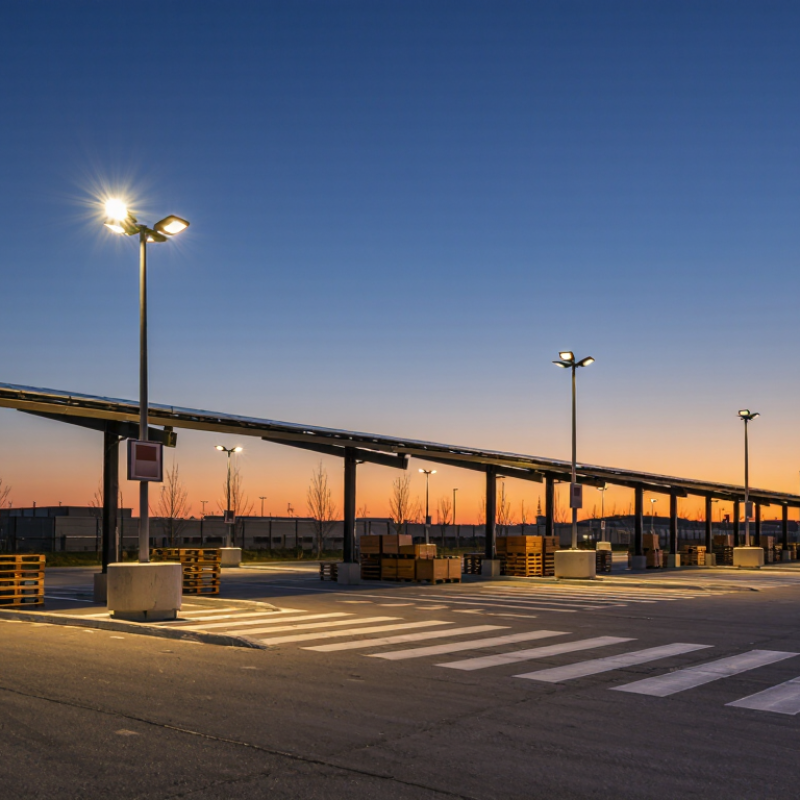
Before selecting solar lighting, define what each area needs to support. A loading bay may require bright, even light for handling goods, while a walkway needs clear edges and visible steps. Note operating hours, peak activity, and any security-sensitive locations. Measure at night. Existing light levels can be uneven, especially near tall buildings or canopies.
Walk the site at different times of day and check for shade from trees, walls, roof overhangs, and parked vehicles. Solar panels need dependable exposure, not just a sunny spot at noon. Record seasonal changes where possible; a tree with bare branches in winter may block sunlight in summer. Also note dust, salt spray, and standing water, since these can affect cleaning needs and fixture placement.
Match the system to local conditions and the required lighting duration. Short winter days or several cloudy evenings can reduce available energy, so ask for performance estimates based on local sunlight data and realistic operating schedules. Check whether poles can be installed securely and whether panels can face useful sunlight without obstructing vehicle routes. Small details matter. A lighting plan may look convincing on paper but still leave a dark corner beside a delivery entrance. Review a site sketch with an electrician or qualified lighting professional, then verify coverage after installation. Some assumptions will need revision. That is normal.
Before choosing commercial solar lighting, observe the site at different times of day. A sunny roof does not guarantee a bright walkway; nearby buildings, trees, signs, and seasonal foliage can cast long shadows. Note where direct sunlight reaches the proposed panel locations, especially during shorter winter days. Cloudy weeks matter. A rough first estimate is easy to make—and easy to regret.
Tips: Photograph each installation area in morning and afternoon light. Mark shade patterns, nearby obstructions, and locations with clear sky exposure. Check that panels can face the useful sun direction without being blocked by roof edges or equipment. Measure, then verify.
Also assess the practical installation space. Can crews reach the mounting surface safely for cleaning and maintenance? Will a pole or wall fixture interfere with deliveries, doors, vehicle paths, or landscaping? Record surface type, available mounting height, and any areas that need consistent illumination. Compare these notes with a lighting layout before ordering equipment. If access is limited, the best sunniest spot may not be the best service location. Site observations are imperfect, so revisit uncertain areas before finalizing the plan.
| Commercial Area | Solar Exposure to Check | Typical Obstructions | Available Installation Area | Practical Installation Approach | Site Suitability |
|---|---|---|---|---|---|
| Open parking lot | Record direct-sun hours at proposed panel locations across representative seasons. Favor positions with clear daytime exposure. | Light poles, trees, nearby buildings, parked vehicles, and shadows from elevated structures. | Check pole locations, underground utilities, vehicle clearances, and access for maintenance. | Use pole-mounted fixtures with panels positioned above likely shade sources; confirm pole structure and foundation suitability. | Often suitable where panels receive consistent sunlight and poles are not shaded for substantial parts of the day. |
| Building entrance or walkway | Check sun access at the proposed fixture and panel position, not just at ground level. | Canopies, façade overhangs, mature trees, signs, and neighboring buildings. | Identify wall sections or nearby poles that avoid doors, signs, accessible routes, and required clearances. | Consider a separate panel mounted in a sunnier position and connected to the fixture where the product configuration permits. | Suitable when the panel can receive adequate sun even if the walkway or entrance itself is shaded. |
| Loading and service yard | Check exposure at different times of day and note seasonal shade from buildings, equipment, and stored materials. | Loading canopies, trailers, tall vehicles, storage racks, and warehouse walls. | Keep proposed fixtures clear of vehicle paths, lifting equipment, loading operations, and maintenance access. | Place panels where temporary vehicle or cargo shadows are least likely; verify mounting height and impact protection needs. | Conditionally suitable; changing vehicle and cargo positions can make exposure less predictable. |
| Building roof | Assess roof-level sun exposure and check for shading at the intended panel tilt and orientation. | Plant equipment, parapets, rooftop structures, adjacent towers, and ventilation units. | Confirm usable roof space, structural capacity, drainage paths, fire-access routes, and maintenance walkways. | Coordinate placement with a qualified building professional and avoid obstructing roof access or drainage. | Often offers good exposure, subject to roof structure, access, and shading checks. |
| Tree-lined perimeter or landscaped path | Observe shade throughout the day and account for seasonal changes in tree canopy. | Tree crowns, branches, hedges, and future plant growth. | Locate fixtures outside pruning, pedestrian, vehicle, and landscape-maintenance conflicts. | Prefer clear-sky positions; reassess exposure after landscaping changes and as trees mature. | Less predictable where foliage blocks sunlight; a site-specific assessment is important. |
| Covered walkway or enclosed area | Measure sunlight at a potential remote panel location; covered areas may receive little direct sun. | Roof coverings, enclosed structures, deep overhangs, and nearby walls. | Check whether an exposed panel location is available without creating cable, access, or safety issues. | Use a system designed for a separately located panel, if available, or compare with a non-solar lighting option. | Usually challenging when no unshaded panel location is available. |
Planning note: These are general site-evaluation guidelines, not measured performance guarantees. Record shading at proposed panel locations, check seasonal conditions, and confirm local permitting, structural, electrical, and lighting requirements before installation.
A solar fixture is a small power system, so compare its parts together. Check panel wattage, voltage, and charging performance in low sun, not just the advertised peak output. NREL’s review of nearly 2,000 photovoltaic degradation rates found a median decline of about 0.5% per year. That makes panel quality and replacement access worth considering over a long service life. Small details matter.
For batteries, compare usable capacity in watt-hours, operating temperature range, and stated cycle life. Ask whether the quoted runtime assumes a new battery, full charge, and mild weather. Those assumptions can flatter the numbers. A shaded loading bay or several cloudy days may change the result, so size storage for local conditions and the hours the site actually needs light.
For lighting, compare delivered lumens, distribution pattern, color temperature, and dimming controls—not watts alone. The U.S. Department of Energy’s solid-state lighting research tracks efficacy in lumens per watt, a useful measure when comparing output with energy demand. IES guidance also makes clear that suitable lighting levels depend on the application. A driveway and a loading dock should not share one default setting. Review beam placement on a site plan, then check for glare and dark gaps. No datasheet predicts every corner perfectly.
Commercial solar lights face more than rain. They must handle wind, dust, vibration, and repeated temperature changes. Check the fixture’s stated ingress and impact ratings, then compare them with the actual site conditions. A coastal car park, for example, may need corrosion-resistant hardware. Inspect seals, fasteners, and cable entries, not just the housing.
Small gaps matter.
Safety starts with placement and predictable performance. Confirm that poles and foundations suit local ground and wind conditions. Keep panels clear of branches, signs, and future construction. At night, check whether the light creates glare for drivers or leaves dark gaps along walkways. A bright patch is not the same as even coverage. Battery protection, secure enclosures, and maintenance access also deserve attention.
Easy to overlook.
Regulatory requirements vary by location and project type. Ask the local authority or a qualified electrical professional which lighting, structural, and battery requirements apply before ordering. Review product test reports and installation instructions, and keep records of approvals and maintenance checks. Do not rely on a sales sheet alone. It is tempting to choose the toughest-looking fixture and move on, but that shortcut can miss the real risks. Recheck performance after installation, especially after the first heavy rain or windy night.
Planning solar lighting starts with the site, not the fixture. Map winter shade, pole spacing, nearby trees, and the hours lights must stay on. Use NREL’s PVWatts tool to estimate local solar production, then size panels and batteries for cloudy periods—not just an average sunny day. A parking lot that looks bright in July may perform very differently in December. Small details matter.
Installation costs include more than poles and luminaires. Budget for trenching or foundations, safe access equipment, controls, and any changes needed to avoid shadows. Ask for a written estimate of annual runtime and expected battery replacement intervals. Battery life depends on chemistry, temperature, and charge cycles, so a single universal replacement date is misleading. That assumption can be wrong.
Maintenance should cover cleaning panels, checking fasteners, inspecting wiring, and testing battery health. The U.S. Department of Energy’s Energy Saver guidance says LEDs use up to 90% less energy than incandescent bulbs and can last up to 25 times longer. That comparison applies to the light source, not the whole solar system. Include battery and component replacements in a 10- or 15-year cost model, alongside labor and downtime. A low purchase price can hide a costly service plan. Keep a simple inspection log; it helps reveal problems before a dark area becomes a safety concern.
Identify each area’s purpose, operating hours, activity peaks, and security needs. A loading bay needs bright, even light. A walkway needs visible edges and steps.
Night inspections reveal uneven lighting and dark corners. Measure existing light near buildings, canopies, entrances, and delivery areas. Paper plans can miss real problems.
Visit the site in morning and afternoon light. Photograph proposed panel locations. Record shade from trees, walls, signs, vehicles, and roof edges.
No. Nearby structures may cast long shadows. Seasonal foliage also changes sunlight. A bright summer roof may perform poorly during short winter days.
Choose locations with dependable sunlight and safe maintenance access. Check mounting height, surface type, vehicle routes, doors, landscaping, and delivery paths.
Use local sunlight data and realistic operating schedules. Size panels and batteries for cloudy periods, not one average sunny day.
Include foundations, trenching, access equipment, controls, cleaning, labor, batteries, wiring, and downtime. A low purchase price may hide expensive servicing.
Clean panels, inspect fasteners and wiring, and test battery health. Keep a simple inspection log. It can expose problems early.
There is no universal replacement date. Battery life depends on chemistry, temperature, and charging cycles. Written estimates help, but they may still need revision.
Choosing the right solar lighting for a commercial property starts with understanding how each area is used, how much illumination it needs, and what site conditions could affect performance. Review available installation locations, shade patterns, sunlight throughout the year, and practical access for installation. These details help determine whether the proposed system can receive enough solar energy and provide dependable lighting where it is needed.
When considering how to choose solar lighting for commercial use, compare panel capacity, battery storage, brightness, runtime, and control features against the site’s requirements. Check that the equipment is built to withstand local weather and meets applicable safety and regulatory requirements. Finally, plan for installation, routine cleaning, inspections, and battery replacement, and estimate the long-term costs as well as the initial investment. A careful assessment of these factors can help create a reliable, efficient lighting plan suited to the property.
GKE Power