How Do Weather Conditions Impact Solar Lights Efficiency?

Time:2026-05-19 Author:Mason
0%

Solar lights are a popular choice for homeowners seeking energy-efficient outdoor lighting. However, many factors influence their performance. An essential aspect to consider is how do weather conditions affect solar lights. Weather varies significantly across regions and seasons. The sun, clouds, rain, and snow all play significant roles.

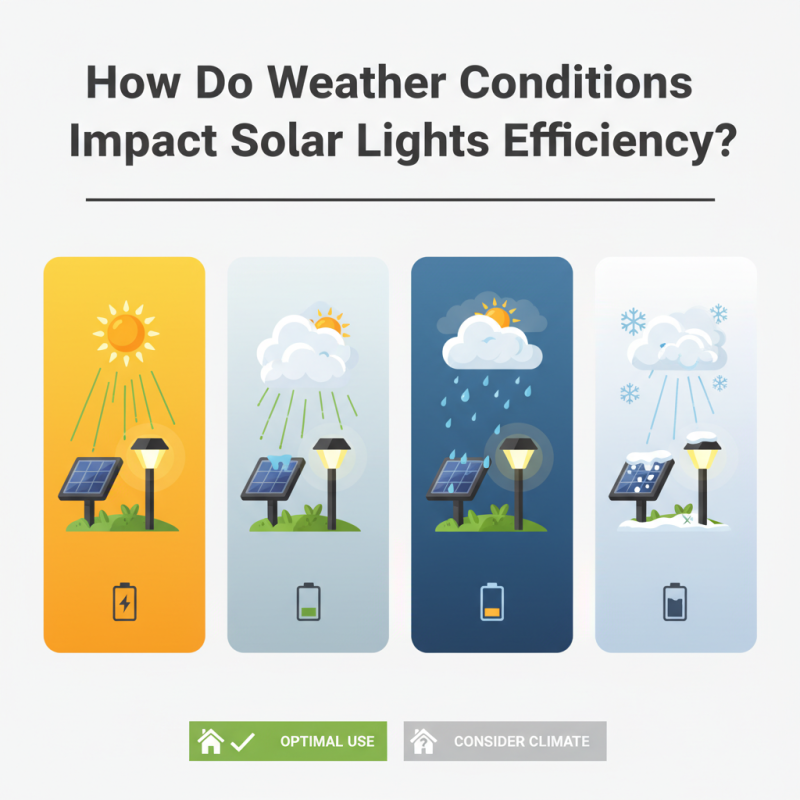
Sunny days provide ample energy for solar panels. These conditions enable lights to operate at peak efficiency. In contrast, prolonged cloudy weather results in diminished sunlight. This can lead to decreased battery charging and shorter light durations. Rain and snow can also hinder performance. Moisture can dirty solar panels, reducing their effectiveness.

Understanding these weather impacts is crucial for optimizing solar light use. Homeowners should consider local climate when choosing solar products. They may need to invest in higher-quality units for areas with frequent inclement weather. Ultimately, while solar lights offer benefits, their effectiveness relies highly on the surrounding environment.
How Do Weather Conditions Impact Solar Lights Efficiency?

Factors Influencing Solar Light Efficiency Under Various Weather Conditions

Weather conditions significantly affect solar light efficiency. In a study by the National Renewable Energy Laboratory (NREL), around 30% of solar output is reduced in cloudy weather. This reduction arises from diffused sunlight. During cloudy days, solar lights may not fully charge. Thus, their brightness diminishes.

Temperature also plays a role. Research indicates that high temperatures can reduce solar panel performance by up to 20%. Extreme cold can create challenges as well. Solar batteries may not operate optimally in freezing conditions. As a result, efficiency fluctuates with seasonality.

Moreover, dust and debris can block sunlight. Regular maintenance is essential for peak performance. A report by the Solar Energy Industries Association (SEIA) highlights that cleaning panels can improve efficiency by 10-25%. Inconsistent upkeep leads to unexpected drops in performance. Understanding these factors is crucial for anyone relying on solar technology.

How Do Weather Conditions Impact Solar Lights Efficiency? - Factors Influencing Solar Light Efficiency Under Various Weather Conditions

Weather Condition Impact on Efficiency (%) Description
Sunny 90% High solar radiation results in optimal performance.
Cloudy 65% Reduced sunlight leads to lower efficiency.
Rainy 50% Significant decrease in sunlight availability.
Snowy 40% Snow can block sunlight completely, severely impacting efficiency.
Windy 75% Wind does not significantly affect light efficiency, but can cause dirt buildup on panels.

The Role of Sunlight Intensity on Solar Light Performance

Sunlight intensity plays a critical role in the performance of solar lights. Solar panels convert sunlight into electricity, which fuels LED bulbs. The efficiency of this conversion is directly affected by how much sun reaches the panels. According to the U.S. Department of Energy, solar panels typically produce about 15-20% of the energy they receive. In cloudy conditions, output can drop significantly, sometimes below 10%.

Temperature can also influence performance. Solar panels operate best between 15°C and 25°C. Extreme heat can reduce efficiency, leading to a loss of power. A report from the National Renewable Energy Laboratory highlights that for every 1°C increase above 25°C, solar panel efficiency declines by 0.5%. This is crucial for areas with intense heat.

Tips: Ensure your solar lights are placed where they receive maximum sunlight. Trim any nearby branches or foliage. Clean the panels regularly to remove dirt and debris. Adjust expectations based on seasonal changes. Remember, inadequate sunlight might not mean the system is faulty; it could simply be a factor of environmental conditions.

Impact of Rain and Cloud Cover on Solar Charging Rates

Rain and cloud cover significantly influence solar lights' efficiency. When clouds obscure sunlight, solar panels produce less energy. Data reveals that solar charging rates can decrease by 25% to 50% during overcast conditions. Research indicates that prolonged rain can affect performance, but solar lights can still charge with diffuse sunlight.

Solar lights, typically using LED technology, usually require about four to six hours of direct sunlight to fully charge. However, cloudy days may make it challenging for solar panels to absorb enough energy. Interestingly, some systems can still function in limited light, relying on previously stored energy.

Tips: Consider placing solar lights in areas receiving maximum sun exposure. Regularly cleaning the solar panels ensures the best performance. Lastly, explore solar lights with built-in backup batteries to mitigate efficiency drops during inclement weather.

Temperature Variations and Their Effect on Solar Light Efficiency

Temperature plays a significant role in the efficiency of solar lights. As the temperature rises, solar panels can experience a decrease in output. Studies show that for every 1°C increase in temperature, solar efficiency can drop by approximately 0.5%. This phenomenon can impact performance during hot summer months. While warmer weather means more sunlight exposure, high temperatures can counteract this advantage.

Cold temperatures also have their challenges. Solar panels perform better in cooler conditions. However, extreme cold can affect battery performance. Lithium-ion batteries, commonly used in solar lights, may struggle in sub-zero temperatures. This limitation can lead to shorter usage times and reduced brightness.

**Tips:**
1. Choose solar lights with high-quality batteries designed for a wide temperature range.
2. Regular maintenance, such as cleaning panels, can help maximize efficiency regardless of temperature.
3. Consider positioning your solar lights in areas with more sunlight exposure to enhance performance.

Balancing these temperature effects is key. Innovators continuously work on improving solar technology to combat these challenges. However, understanding the impacts of temperature is essential for users seeking the best performance from their solar lights.

Snow and Ice Accumulation: Challenges for Solar Lights Performance

Snow and ice can severely hinder the efficiency of solar lights. When snow accumulates on solar panels, it blocks sunlight from reaching the cells. This drastically reduces their ability to generate electricity. Ice can also form on these surfaces, adding weight and creating problems for both the panels and the fixtures. The combination of frost and cold temperatures may further complicate performance.

Many users notice that their solar lights become dim or stop working altogether in winter months. This issue often goes unnoticed until nighttime when the lights do not activate. Regular maintenance can help, but the reality is that not everyone checks their outdoor fixtures often. In regions with heavy snowfall, considering alternative solutions may be necessary.

Moreover, relying solely on solar lights in such conditions may not be practical. It’s essential to understand the limitations of solar technology. Users might consider supplemental lighting sources. This could ensure safety and visibility during harsh weather. Reflecting on these challenges allows us to adapt and improve outdoor lighting strategies effectively.

Impact of Snow and Ice Accumulation on Solar Lights Efficiency

FAQS

: How does sunlight intensity affect solar light performance?

: Sunlight intensity directly impacts how well solar panels convert sunlight into electricity for LED bulbs.

What percentage of sunlight do solar panels typically convert?

Solar panels generally convert about 15-20% of the sunlight they receive into energy.

How does cloudy weather influence solar panel output?

In cloudy conditions, solar panel output can fall below 10%, significantly affecting performance.

What temperature range is best for solar panels?

Solar panels work best in temperatures between 15°C and 25°C for optimal efficiency.

How does extreme heat affect solar panel efficiency?

For every 1°C above 25°C, solar panel efficiency decreases by 0.5%, impacting energy generation.

Can snow accumulation affect solar lights?

Yes, snow blocks sunlight from reaching the panels, reducing their electricity generation ability.

What happens to solar lights in winter?

Many users find solar lights dim or unresponsive due to snow and cold temperatures.

How can users maintain solar lights during winter?

Regular maintenance helps, but not everyone checks their fixtures frequently during harsh weather.

Should users consider other lighting sources in snowy conditions?

Yes, supplemental lighting might be necessary for visibility and safety during winter months.

What can users do to maximize solar panel performance?

Keep panels clean, trim nearby branches, and adjust expectations based on seasonal sunlight changes.

Conclusion

Weather conditions play a significant role in the efficiency of solar lights, influencing their performance in various ways. Key factors include sunlight intensity, which directly affects how effectively solar panels can charge during daylight hours. Additionally, rain and cloud cover can diminish solar charging rates, leading to reduced energy availability at night. Temperature variations also play a role; extreme heat or cold can negatively impact battery performance and overall functionality.

Moreover, the accumulation of snow and ice presents unique challenges for solar light performance, as it can obstruct sunlight from reaching the solar panels. Understanding how do weather conditions affect solar lights is crucial for optimizing their use and ensuring that they operate effectively year-round, regardless of environmental challenges. By recognizing and adapting to these factors, users can enhance the reliability and efficiency of solar lighting systems.

Mason

Mason

Mason is a seasoned marketing professional with a deep expertise in the company's offerings and a passion for driving brand awareness. With a strong background in digital marketing strategies, he has an innate ability to connect with diverse audiences and effectively communicate product benefits.......