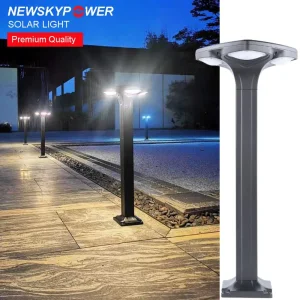
These four original catalogue entries are presented first because they cover pavement marking, landscape inground lighting, high-output project luminaires and solar road-stud visibility. Product imagery and product URLs are retained for direct specification review.
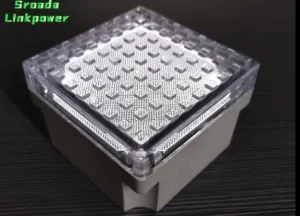
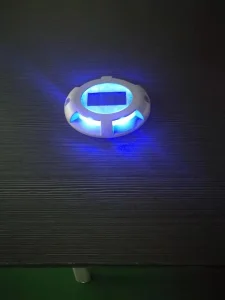
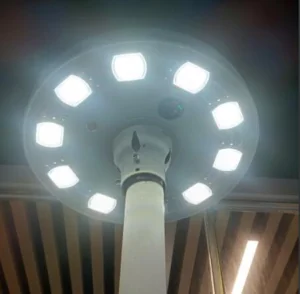

The phrase “Solar Underground Lights Factories & Supplier in the Novosibirsk market” mixes commercial investigation, supplier verification and project-specific technical intent. A useful page must answer all three layers without turning into a product wall.
In semantic search, a buyer rarely types only “solar underground light.” A distributor may search for a solar underground light factory, IP68 inground supplier, OEM/ODM manufacturer, low-temperature battery option, MOQ, EAC documentation, spare-parts support or a replacement for a failed imported fixture. A contractor may search by application: pathway, driveway, park, parking edge, step warning, RGB landscape, road stud or pavement marker. A facility manager may search by failure mode: water ingress, cracked lens, dim output, dead battery or corroded housing. Each query expresses a different decision stage.
The primary information gain of this white paper is the shift from headline wattage to system-level fitness for Novosibirsk. An underground solar light is a miniature off-grid power system containing PV harvesting, battery storage, battery management, driver electronics, LED optics, thermal design, mechanical sealing and an installation base. In a continental climate with low winter sun, snow cover, freeze-thaw cycles, de-icing salts and snowplow impact, the weakest part of that system determines the outcome. Buyers should compare energy budgets, cold-weather protection, ingress design, service access and traceability, not only the number printed on a label.
The buyer-intent clusters worth answering are clear: “factory or trading company,” “IP68 or IP65 for recessed ground use,” “can it work in winter,” “what battery is used,” “what is the MOQ,” “can you print our brand,” “what documents are supplied,” “how is warranty handled,” and “what is the total cost of ownership over five winters.” The product cards, factory evidence, compliance notes and FAQ below are structured around those questions.
Send your application, quantity, voltage, colour temperature, IP/IK requirement and expected winter operating profile. The reply should be a specification route, not just a price list.
Novosibirsk is not a generic export destination. It is one of Siberia’s largest urban and economic centres, with a science and education identity, industrial depth, logistics links and a demanding winter operating environment.
Novosibirsk combines administrative functions, scientific institutions, universities, manufacturing, logistics, retail and residential development. Akademgorodok gives the city a distinctive research and technology profile, while rail and road connections support distribution into surrounding regions. For a lighting supplier, that means the addressable buyer base is broader than households: municipal contractors, campus facility managers, electrical wholesalers, industrial plants, property developers, retail chains, hospitality operators, parking operators and infrastructure maintenance teams. The common procurement question is not “does it glow?” but “will it remain safe and serviceable after a Siberian winter?”
In commercial and civic space, demand is driven by pedestrian safety, winter wayfinding, landscape identity, low maintenance and reduced trenching. Recessed solar markers and inground luminaires can delineate path edges, steps, parking borders and plaza zones without the cable runs required by conventional mains lighting. In industrial and logistics areas, underground lights support apron edges, loading-zone guidance, yard walkways, staff routes and hazard marking. In residential compounds, they improve night-time legibility without creating glare into windows. In parks and campuses, they blend lighting with landscape design. These are different use cases, but they share a need for robust sealing, drainage, cold-weather batteries, glare control and simple service access.
The climate sets the engineering agenda. Novosibirsk has a strongly continental climate with long, cold winters. Temperatures below −20°C are a normal design consideration, and occasional extremes below −35°C to −40°C should be discussed with the battery and electronics supplier. Snow accumulation, freeze-thaw movement, de-icing salts, sand, grit, snowplow impact and low solar altitude in mid-winter all affect product selection. A recessed fixture that performs in a mild coastal market may fail in Novosibirsk if the base detail traps water, the gasket hardens, the battery cannot charge safely at low temperature, or the PV surface is buried under snow for days. Local buyers are right to ask for evidence rather than a wattage claim.
The commercial opportunity is real, but the market is price-aware. Low-cost imports can win a first order and then create maintenance costs through water ingress, cracked lenses, corroded screws, dim LEDs or premature battery failure. Mature buyers therefore move toward suppliers that can explain trade-offs: when solar-only is suitable, when hybrid or grid-assisted power is safer, how snow clearing affects yield, how battery replacement works, what spare parts are stocked, and what batch traceability is provided. A supplier that treats Novosibirsk as a climate-specific engineering market gains more durable trust than one that simply relabels a warm-climate catalogue.
Search behaviour reflects this maturity. Queries combine city terms, application terms and proof terms: “solar underground light supplier Novosibirsk,” “IP68 inground light factory,” “low temperature solar garden light,” “solar road stud price,” “OEM solar underground light,” “EAC solar light documents,” “waterproof step light for snow,” and “replacement battery for solar ground light.” A page that answers these questions with technical specificity, original product links, factory evidence and a clear inquiry path has stronger semantic relevance than a thin list of products.
Novosibirsk projects rarely need “a light.” They need a low-level lighting function that survives snow, salt, maintenance cycles and long dark evenings. These six scenarios map the most credible demand routes.
Recessed markers and step lights can reduce trip hazards and clarify path edges when snow narrows walkable zones. Specify glare control, snowplow clearance, drainage and a serviceable base. For safety-critical pedestrian routes, use hybrid or grid-assisted versions where continuous winter illuminance is required; solar-only decorative markers should not be treated as a substitute for regulated egress lighting.
Warm-white low-glare illumination, PIR sensing and RGB identity lighting are common requests. The practical specification points are window glare, battery access, snow-clearing access, anti-corrosion fasteners and consistent colour temperature across batches. Courtyard lighting should feel safe without turning into a light spill problem for residents.
Universities, research campuses and technology parks need wayfinding, landscape accents and testable sustainability features. A pilot installation with lux measurement, battery-health checks and snow-cover observations can generate useful evidence before a wider roll-out. Dark-sky-friendly optics and low glare are important in knowledge-campus environments.
Industrial buyers prioritise mechanical resistance, corrosion protection, water ingress control and maintenance speed. Underground markers should resist forklift traffic, snowplow edges, grit and de-icing salts where relevant. Batch traceability, QR labels, replaceable modules and spare-parts kits reduce downtime and make multi-site procurement easier.
Architectural inground lights, glass-brick effects, RGB options and cat-paw or disc designs help create identity. The risk is choosing a decorative fixture with no maintainability. A sound commercial specification balances visual effect with replaceable batteries, sealed connectors, UV-stable lenses, anti-slip surfaces and a clear cleaning routine.
Solar road studs, dock lights and step-warning fixtures improve legibility where cable installation is expensive. In snowy conditions, mounting height, drainage, salt-spray resistance and snow-clearing protocol matter more than nominal lumens. Where road authority requirements apply, underground markers should supplement, not replace, compliant road lighting.
These retained catalogue entries cover step and landscape lighting, stadium and high-pole applications, pathway warning lights and decorative garden lighting.


A credible solar underground light for Novosibirsk is engineered as an energy system, a mechanical enclosure and a serviceable asset. The roadmap below is a practical specification framework for buyers and distributors.
An inground solar luminaire operates in one of the harshest positions on a site: close to water, snow, salt, grit, vibration and impact. The solar panel may be small, the battery volume is constrained, and maintenance access is often difficult. In a low-sun winter market, energy budgeting must be conservative. A fixture that appears bright during summer testing can become dim after several cloudy weeks or after snow covers the PV surface. That is why the specification discussion should move from “how many watts?” to “what energy does it deliver in the worst realistic month, and what happens when the battery is cold?”
The technical route for Novosibirsk should include four coordinated layers: low-temperature energy architecture, optical and mechanical resilience, intelligent control without fragility, and validation with installation guidance. These layers are more valuable than a long list of optional features because they determine whether the fixture remains useful across multiple winters.
LiFePO4 is commonly preferred for cycle life and thermal stability, but the BMS must protect against charging below the safe temperature window. PV capacity, battery capacity, MPPT efficiency, standby consumption and daily lighting hours should be modelled for the worst month, not the best month. For safety-critical routes, hybrid or grid-assisted power is more honest than an over-promised solar-only solution.
High-efficiency LEDs, TIR optics, anti-glare shielding, UV-stabilised PC lenses, die-cast aluminium, 316 stainless fasteners, compression gaskets and pressure-equalisation details all matter. IP68 is not a label to assume; it depends on the complete assembly, cable entry, base drainage and installation method. Impact resistance, freeze-thaw movement, snowplow contact and salt-spray exposure should be assessed for the intended location.
Photocell control, PIR sensing, adaptive dimming and battery-health logic can improve autonomy, but unnecessary app dependency or fragile wireless modules can reduce reliability. The best control strategy is simple, serviceable and documented. Optional telemetry can help distributors monitor pilot projects, but it should not be required for basic lighting operation.
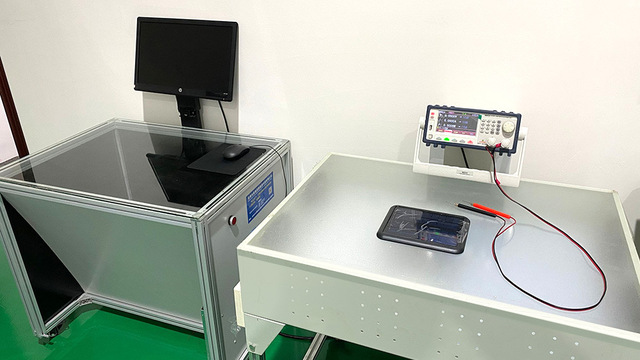
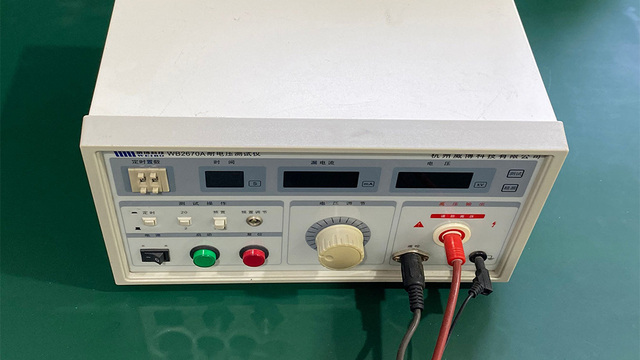
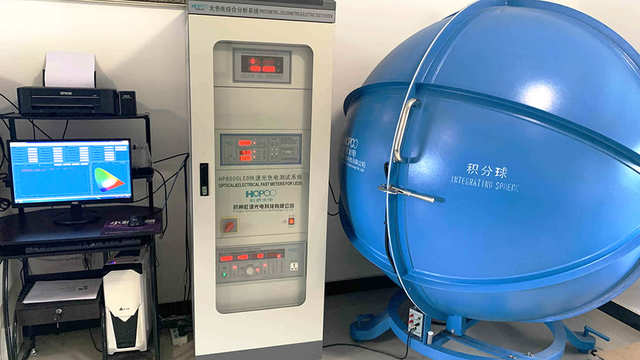
Request thermal-cycling, ingress, corrosion, mechanical-load and aging-test evidence where available. A site mock-up before a large order is valuable in Novosibirsk. Installation details—base compaction, drainage, cable glands, torque values, snowplow clearance and access for battery replacement—protect both performance and warranty. L70 light maintenance, battery cycles and spare-parts availability should be part of the total-cost discussion.
Future outlook. The next stage of the market is likely to reward evidence over appearance. Buyers will ask for cold-climate validation, modular battery replacement, lower glare, dark-sky-friendly optics, recyclable housings, batch traceability and clear coexistence with mains lighting. Solar underground lights will increasingly be specified as one layer in a hybrid lighting strategy: decorative and wayfinding tasks can be solar autonomous, while regulated road and egress lighting may require grid connection, centralized batteries or hybrid solar systems. For factories, the winning proposition is not “one product for every site,” but a disciplined ability to configure the product for the local climate and document the trade-offs.
China remains a major manufacturing base for solar outdoor lighting because the supply chain is deep, fast and modular. The advantage is not only cost; it is the ability to iterate optics, batteries, sealing, drivers and packaging for a specific market such as Novosibirsk.
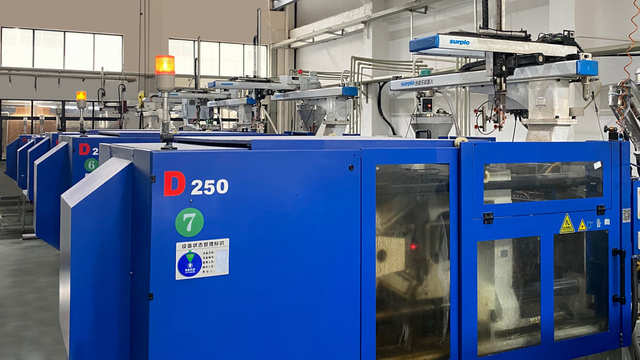
Ningbo and the wider Yangtze River Delta region provide access to LED packaging, solar cells, lithium battery packs, BMS boards, drivers, injection-moulded lenses, die-cast aluminium, gaskets, fasteners, cartons and export services. This density supports faster sampling, tooling changes, component substitution and production scaling. For solar underground lights, it also supports the less visible parts of quality: incoming component inspection, IP assembly discipline, aging tests, packaging drop checks and batch traceability.
Supply-chain resilience should be judged by how a factory responds when a component changes. Does it have qualified alternates for LEDs, batteries or drivers? Does it re-test the assembly after substitution? Can it stage production for a distributor’s multi-site project? Can it provide spare parts, replacement batteries, custom labels, Russian-English manuals and pre-shipment inspection? Efficiency should be judged by communication speed, sample discipline, production consistency and documentation quality—not only by the lowest quotation.
For Novosibirsk, a factory-direct OEM/ODM route can add practical value: cold-weather battery selection, low-temperature charge protection, anti-corrosion fastener options, snowplow-resistant low-profile designs, custom packaging for rail or road transport, and batch-specific test records. The buyer should still validate the final configuration through samples, test reports and a pilot installation.
Ningbo GKE Power Co., Ltd. is a professional Solar Street Light Manufacturer and a trusted supplier of solar wall and pathway lighting solutions, dedicated to delivering efficient and sustainable outdoor lighting systems worldwide. With a strong focus on renewable energy technology, the company integrates design, research and development, and manufacturing to provide reliable solar lighting products for diverse applications.
GKE Power offers a comprehensive range of outdoor solar lighting solutions, including solar street lights, solar wall lights, and solar pathway lights, widely used in urban roads, residential communities, parks, campuses, and rural electrification projects. Its products are designed with high-efficiency solar panels, long-lasting lithium batteries, and intelligent control systems to ensure stable performance, energy savings, and low maintenance costs.
Backed by advanced production facilities and a skilled engineering team, the company is committed to strict quality control and continuous innovation. All products are manufactured in compliance with international standards, ensuring durability and reliability in various environmental conditions.
In addition to standard product lines, Ningbo GKE Power Co., Ltd. provides flexible OEM and ODM services, enabling customers to customize lighting solutions based on specific project requirements. Guided by the vision of promoting green energy and smart lighting, GKE Power continues to support global infrastructure development with cost-effective and environmentally friendly solar lighting solutions.
For the Novosibirsk market, the quotation should be supported by a specification file, not only a picture and a price.
All twelve original image assets from the source content are retained below for factory review, product familiarity and visual due diligence.
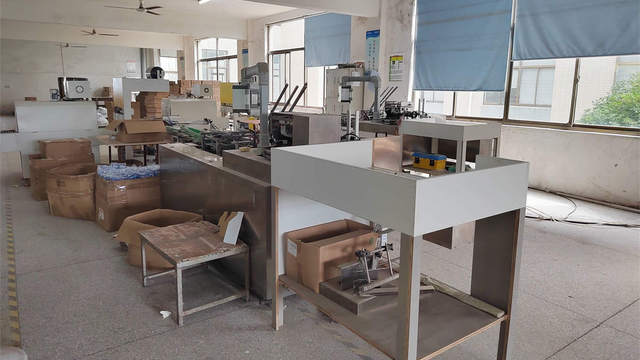
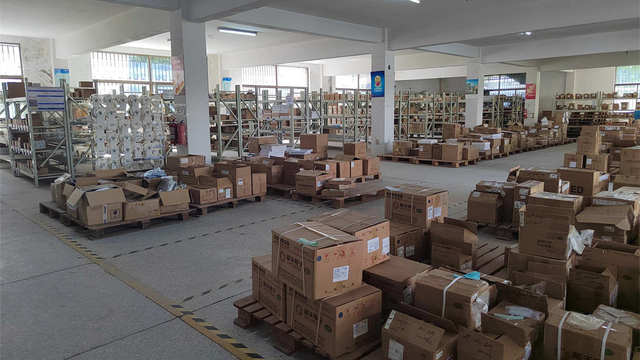
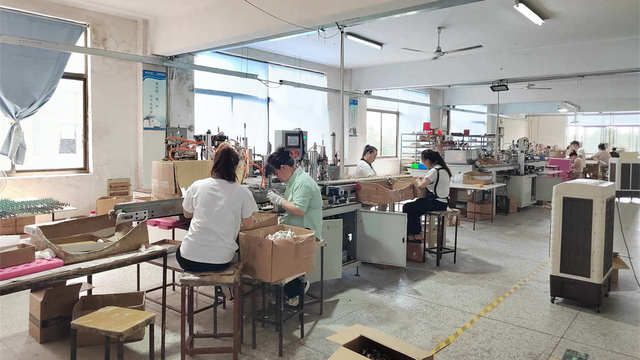
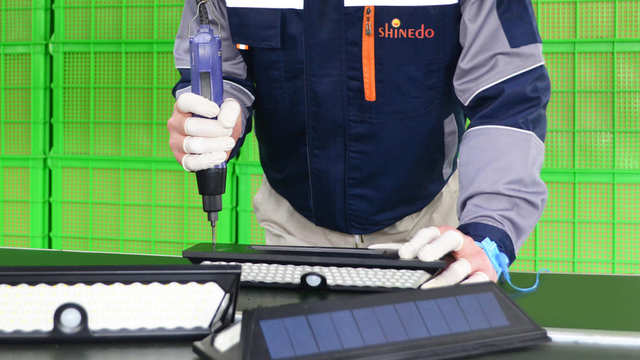
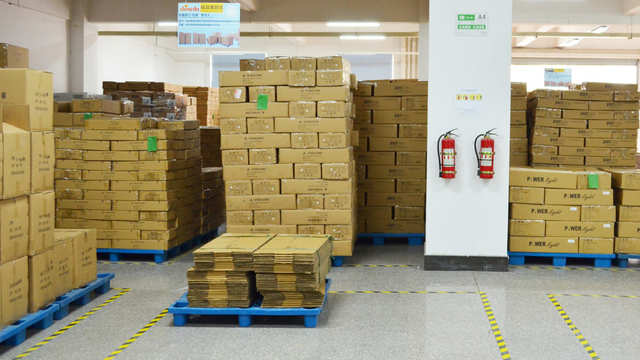



Solar outdoor lighting is moving from off-grid novelty into mainstream infrastructure, but the market is diverging into retail garden products and project-grade systems. Novosibirsk buyers sit in the more demanding project-grade segment.
Globally, demand is shaped by energy transition policy, the cost of trenching and cabling, resilience planning, smart-city budgets and the need to light spaces where grid connection is expensive or delayed. Solar underground lights are used in landscape architecture, campuses, parks, residential compounds, parking edges, industrial wayfinding, road studs and temporary infrastructure. At the same time, buyers are more sophisticated. Cheap fixtures with vague battery specifications are increasingly rejected in projects where maintenance call-outs are expensive.
The commercial split is important. Retail buyers may prioritize appearance, easy installation and low price. Project buyers prioritize standards, test evidence, lifecycle cost, spare parts and supplier responsiveness. In cold climates, the technical bar rises again: low-temperature charging, snow-cover resilience, salt corrosion, freeze-thaw sealing and glare control. The global market is therefore not one market. A supplier that can document configuration logic and field support has an advantage over one that only quotes a headline wattage.
Buyers are calculating battery replacement, cleaning, service visits and failure rates over three to five winters, not just the first purchase price.
Project-grade procurement increasingly expects ingress, impact, battery, EMC and safety documentation, plus batch-level traceability.
Cold-climate markets are asking for low-temperature BMS protection, drainage design, salt-spray resistance and snowplow-aware mounting.
Solar-only works best for low-energy wayfinding and decorative tasks; hybrid systems are increasingly specified where reliability is non-negotiable.
Compliance is a chain of evidence, not a decorative certificate. The applicable route depends on voltage, battery, wireless modules, installation location and the importer’s customs classification.
For the Russian Federation and the wider Eurasian Economic Union, buyers should confirm the applicable EAC conformity route with a local certification body. Depending on product configuration, low-voltage safety, electromagnetic compatibility and RoHS-type restrictions may be relevant, often discussed under TR CU 004/2011, TR CU 020/2011 and TR CU 037/2016. Lithium batteries require transport documentation and safety evidence such as UN38.3 test summaries and MSDS, with IEC 62133-type cell and pack safety information where available. Ingress protection is commonly assessed against IEC 60529, impact against IEC 62262, and PV modules—if separately supplied—against applicable IEC 61215/61730 requirements. Local legal and customs advice is essential; this article is not legal advice.
Localized support should be contractual. For a Novosibirsk distributor, that means Russian-English installation instructions, clear warranty terms, spare-parts lists, battery replacement guidance, batch labels, pre-shipment inspection reports, packaging suitable for long-distance rail or road transport, and a named technical contact. If a project is safety-critical, the supplier should state in writing where solar-only operation is suitable and where hybrid or mains power is required.
Confirm the applicable EAC scheme, technical file, label information, HS code and importer responsibilities before shipment. Documentation requirements should be agreed in the quotation.
Drivers, chargers and control electronics should be reviewed for the destination voltage and applicable safety/EMC requirements. Fuses, polarity protection and surge considerations should be documented.
UN38.3, MSDS, state-of-charge limits, packaging and carrier requirements are part of the logistics plan. Cold-weather BMS protection should be specified separately from transport safety.
Request IP and IK test evidence where available, plus assembly details for gaskets, cable entries and drainage. A certificate without installation control may not survive real ground conditions.
Manuals, warning labels, warranty conditions and maintenance schedules should be usable by local installers and facility teams, not only by the importer’s engineer.
Define response times, spare-parts kits, battery replacement process, defect evidence requirements and batch traceability. Good after-sales design is part of product quality.
Use this checklist before comparing quotations. It helps separate a genuine factory-grade solution from a catalogue image with an optimistic label.
For a Novosibirsk distributor, the strongest RFQ is not “send your best price for solar underground lights.” It is a short technical brief: application, quantity, mounting surface, expected traffic, snow-clearing method, required operating hours, colour temperature, IP/IK target, battery replacement expectation, compliance documents and target project date. A factory that can respond to that brief with a configuration sheet and test evidence is easier to trust than one that responds only with a picture and a discount.
Search-engine visibility also benefits from this clarity. Product pages should connect the product to the use case, the climate, the compliance question and the procurement step. That is how informational queries, commercial investigation and transactional queries support one another instead of competing.
These are the questions most frequently raised by distributors, contractors and facility teams comparing factory-direct solar underground lighting.
They can work for low-energy decorative, landscape and wayfinding tasks when the energy budget, battery protection, drainage and snow-clearing routine are designed for winter. They should not be assumed to provide continuous safety-critical illuminance through heavy snow cover and very low solar input. For regulated egress or road lighting, specify hybrid or grid-assisted systems.
IP68 is a sensible target for recessed ground fixtures, but only if the base drainage, cable entry and installation method support it. IK rating should reflect traffic: pedestrian areas, driveways, forklift zones and snowplow edges have different impact risks. Request test evidence and assembly drawings rather than accepting a catalogue claim.
Do not compare headline numbers without understanding input, output and test conditions. For solar underground products, ask for LED power, luminaire flux, beam angle, battery capacity, PV capacity, daily operating hours and worst-month autonomy. A strong label can hide a weak energy system; a well-documented lower-output system can perform better over a winter.
Usually not. Underground markers and low-level lights can supplement road lighting, delineate edges or improve wayfinding, but road-authority requirements often demand specific illuminance, uniformity and power resilience. Use solar underground products where their function is appropriate, and keep compliance-critical lighting on an engineered mains or hybrid supply.
GKE Power’s original profile states that it provides flexible OEM and ODM services for customized lighting solutions based on project requirements. Buyers should define branding, packaging, voltage, CCT, sensor logic, battery configuration, connector type, documentation language and warranty terms in the specification before tooling or mass production.
Depending on the product, the importer may need EAC-related conformity evidence, electrical safety and EMC documents, battery UN38.3 and MSDS files, IP/IK test reports, RoHS/REACH information for relevant markets, commercial invoice, packing list, HS code and Russian-English manuals. Confirm the exact route with a local certification body and customs broker.
Add purchase price, transport, customs, installation, snow-clearing labour, cleaning, battery replacement, failure rate, spare-parts logistics and warranty administration. For a five-winter view, a durable fixture with replaceable modules may be cheaper than a low-cost fixture that fails after one or two seasons.
Use a properly compacted and drained base, preserve cable-entry sealing, follow torque values, avoid trapping water, keep snowplow clearance, provide service access and document the installed batch. In freezethaw conditions, incorrect installation can damage even a well-made fixture; photographs and commissioning records help both the installer and the warranty process.
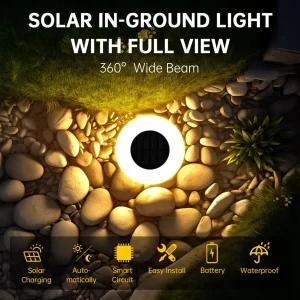
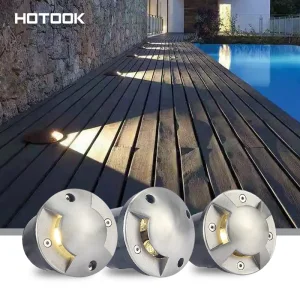
The final selection retains eight original catalogue entries for boat docks, RGB pathways, split solar street lighting, ground sensing, decorative wall and lawn lighting, disc ground lights and IP68 recessed RGB inground fixtures. Product images and original URLs are preserved.



 GKE Power